
- Guide
- Flavors
Text by multimedia reporter Wei Jinglin; photographs supplied by the interviewees
A table of mountain and sea, a thousand years of Zayton feeling. As a World Heritage city and a world city of gastronomy, Quanzhou's everyday vitality has never been only about what is on the tongue. For centuries, the melodic Nanyin music, the exuberant floral headdresses, the elegant old mansions and the distinctive culture of the Hui'an women have all been rooted deep in the life of the old city's streets.
Today this thousand-year-old city has broken down the boundary between culture and food, weaving traditional crafts, folk customs and historic architecture into its dining scene. From lively signature floral banquets and refined Chinese-style restaurants to the old mansions of West Street steeped in history, inventive themed cafés and seafront restaurants, visitors come for heritage cuisine and stay to touch the living culture of Quanzhou and read the city's creative energy.
Floral headdresses, Song-dynasty elegance, and time to linger over a meal
'Flowers of Xunpu on your head, the taste of southern Fujian on your tongue, the music of the Song and Yuan in your ears - this romance belongs to Quanzhou alone.' In early autumn the Xunpu Floral Banquet has been drawing crowds, becoming the first stop for visitors who want to check in on the old city's heritage cuisine. Stripped of the shallowness that often comes with internet fame, it uses food as its medium and intangible heritage as its core, blending the fishing-village customs of Xunpu, Song-dynasty elegance in performance and southern Fujian specialities into a single immersive heritage banquet, letting thousand-year-old folkways come alive in the lively bustle of everyday dining.
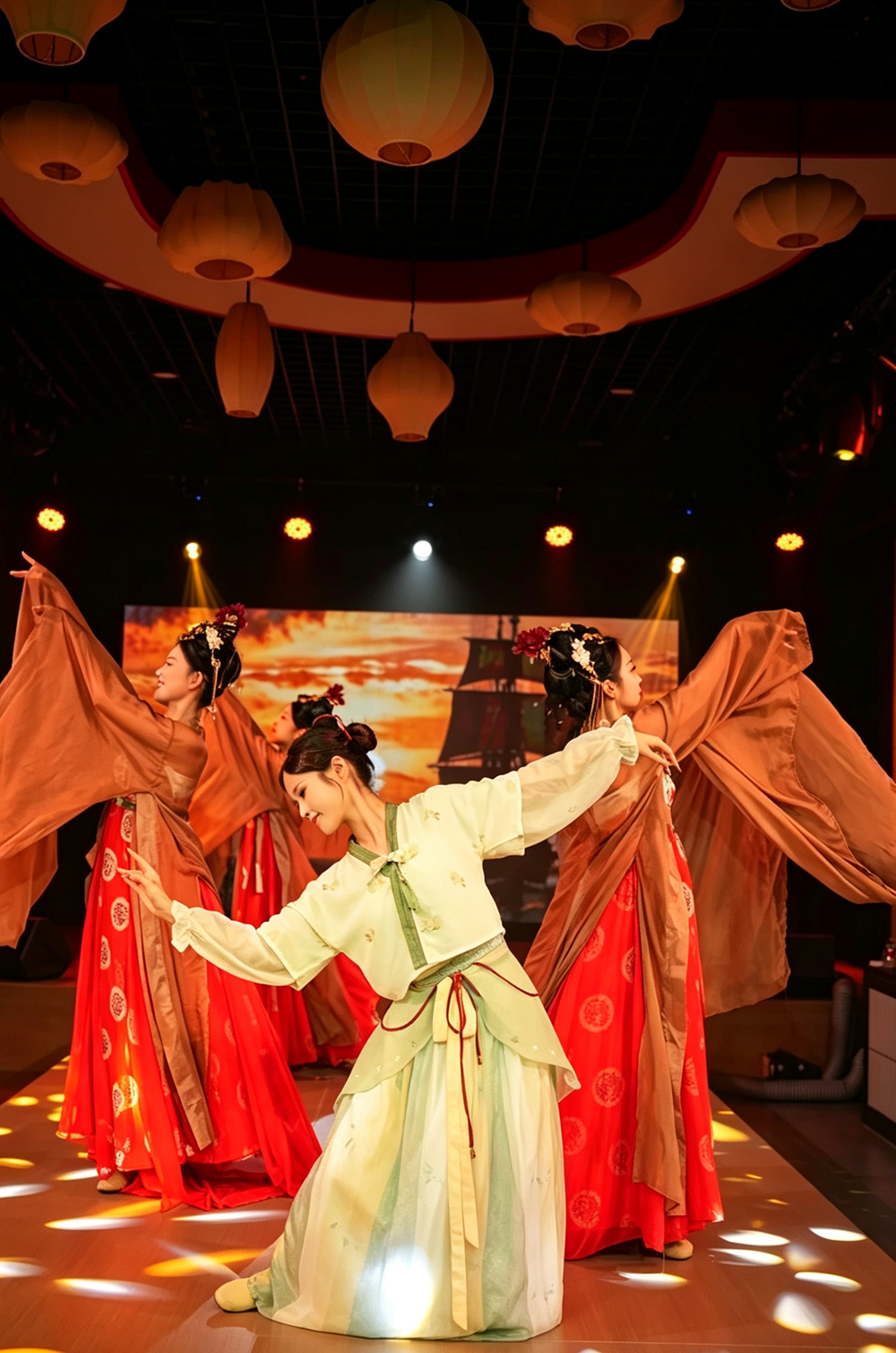
Classical dance performed at the Xunpu Floral Banquet restaurant
Step into the Xunpu Floral Banquet experience hall and warm light fills the room; the restrained, elegant 'new Chinese' décor creates a strong sense of culture. Unlike the uniform layout of an ordinary restaurant, heritage experience runs through the whole meal. Before sitting down, guests can try on an authentic Xunpu floral headdress (zanhuawei) free of charge. A banquet table, a head of flowers and a hall full of Song-dynasty elegance - and the distinctive Chinese-style atmosphere of Quanzhou clicks into place at once. Between courses, graceful Song-dynasty classical dance unfolds, the dancers' sleeves floating and their steps gentle, recreating the elegance of Song banquet music; the clear, lingering sound of Nanyin, a thousand-year-old musical tradition, drifts through the hall. Every dance and every song is a miniature of Song-Yuan Quanzhou. On the table, dozens of Quanzhou classics are laid out in order - tusundong, ginger duck, four-fruit soup - their authentic old-fashioned tastes waking up memory, with mountain and sea flavours showing the best of southern Fujian. One feast combines taste, sight, sound and participation, so that diners can take in all of Quanzhou's intangible heritage without leaving their seats.
'I have visited many old cities, and this is the first time I have found a restaurant that combines folk customs, performance and food so well,' says Li Yaqi, a visitor from Zhejiang province who came to Quanzhou at the weekend with her family specifically to try the Floral Banquet. She says she had heard that Xunpu's floral headdresses were a sensation online, but had not expected to be able to experience everything in one meal; the atmosphere is remarkable. On bringing her child along, she adds: 'The child ate the local snacks while watching Nanyin and Song-dynasty dance, taking in traditional culture directly - far more vivid than reading about it in a book. One meal and I understood the gentleness and depth of Quanzhou.'
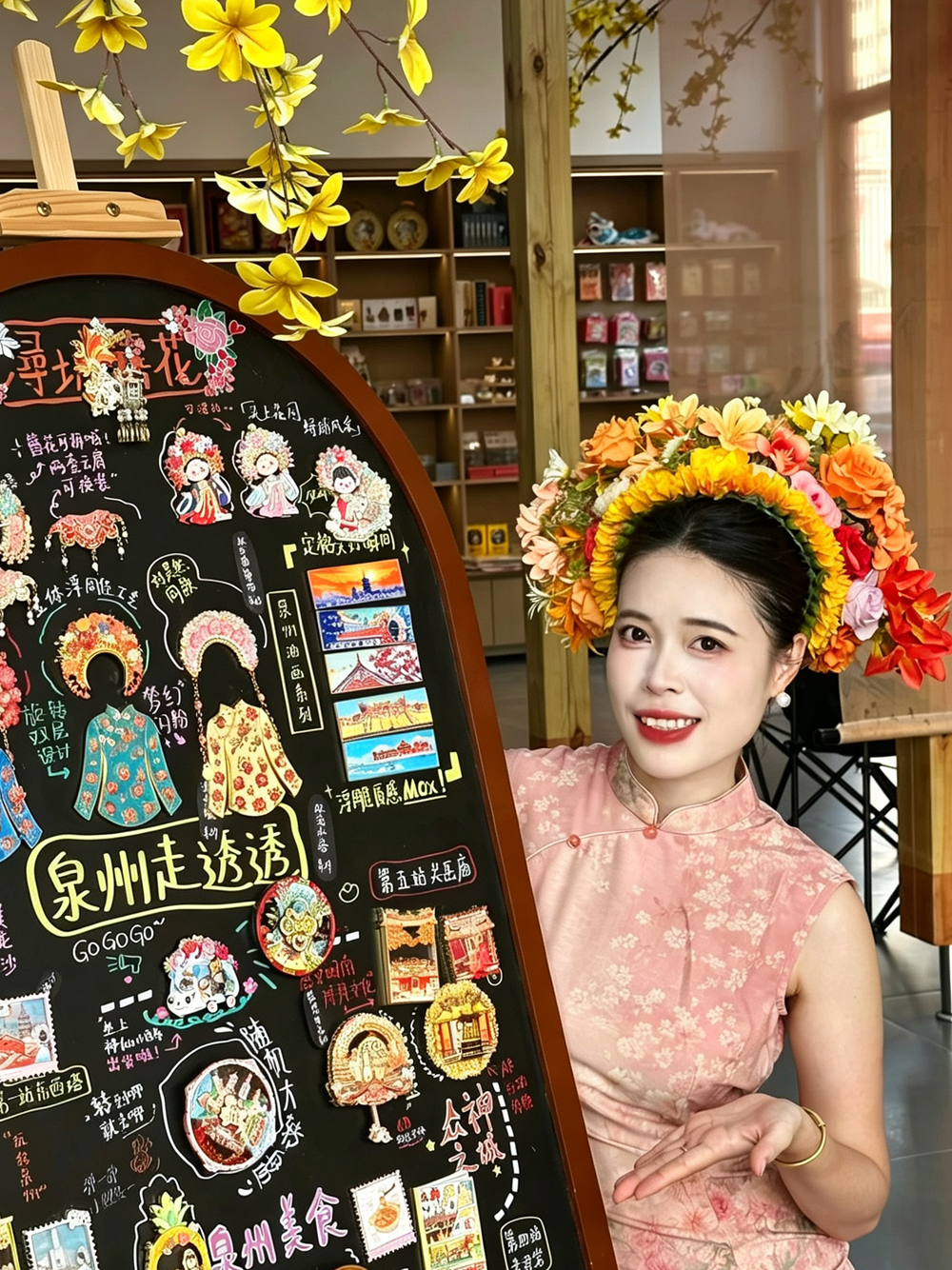
Guests can try on a floral headdress and buy distinctive cultural and creative products at the restaurant
At Fengli Lou, the kitchen team weaves the aesthetics of the floral headdress into the table itself, letting heritage details seep into the everyday act of dining. The whole restaurant takes the colours of the Xunpu headdress as its design key: wall decorations, screens, ornaments and lighting all borrow the layered, blossoming shapes and bright hues of zanhuawei, creating a room where every step is a view and the air feels full of flowers, as though diners were sitting in the midst of a Xunpu fishing-village flower sea. Most striking are the creative heritage dishes. Moving beyond conventional plating, the chefs have drawn on Quanzhou's folk aesthetics, selecting fresh fruit - mango, blueberry, cherry tomato, green grape - and carving and arranging it layer by layer to recreate the classic form of the Xunpu headdress. These vivid, finely shaped 'floral headdresses on a plate' keep the ingredients' natural flavours while presenting the fishing village's heritage aesthetics in full: beautiful to look at and good to eat. From flowers on the head to blossoms on the plate, from folk symbol to feast, the zanhua tradition has broken out of the single check-in photograph and found living transmission through food, letting thousand-year-old fishing-village culture be seen, understood and loved by more people.
Old mansions revived, hosting the refined arts
Deep in the everyday bustle of old Quanzhou lies a streetside civic charm and a cultural root that have not changed in a thousand years. The century-old mansions lining the streets, with their upturned eaves and red-brick walls, bear witness to the city’s long‑standing history. Once quiet and run-down, these houses are now being revived through tourism innovation. Many have broken the limits of single-purpose operation, combining guesthouses, distinctive restaurants, Chinese-style teahouses and arts spaces under one roof, and staging Nanyin and string-puppet performances, to become new landmarks of old-city tourism that hold classical elegance and everyday vitality as well as youthful energy.
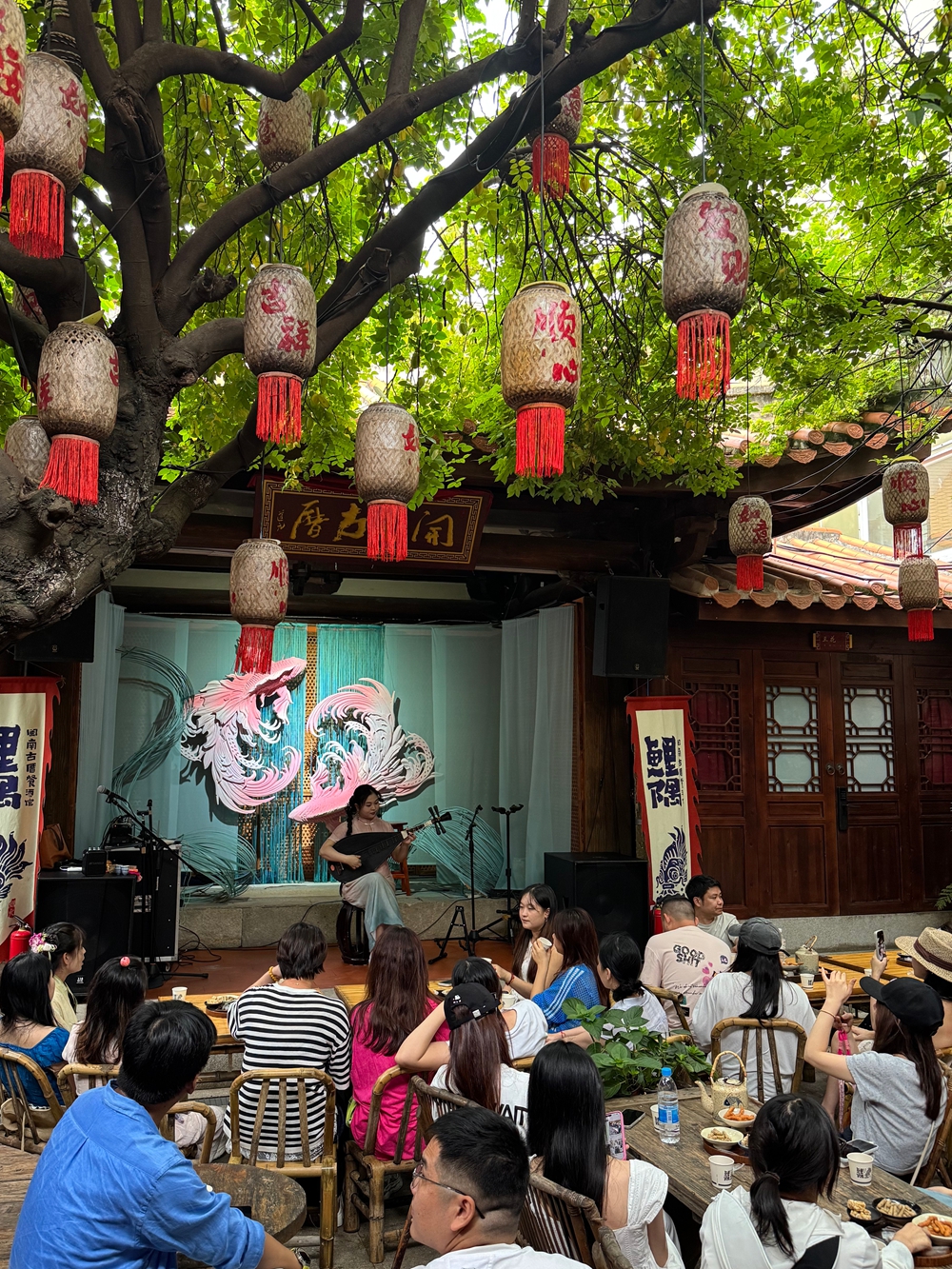
Enjoying tea and listening to Nanyin in the restaurant
Walking through the Kaiyuan Old Mansion, one finds the century-old brick-and-timber structure intact: carved window lattices, a bluestone courtyard, timber corridors - the craftsmanship of southern Fujian architecture everywhere you look. Unlike the serene, tranquil atmosphere of a traditional old mansion, here everyday vitality and refinement live side by side. In the afternoon the mansion teahouse is full; young visitors in plain, elegant hanfu sit beside the courtyard, trying Song-dynasty tea-whisking (diancha). Warming the cup, roasting the tea, grinding it, whisking it, topping painting - every movement recreates the elegance of a Song tea gathering. The fragrance of tea hangs in the air and the Chinese-style tea snacks are delicate; a thousand years of Song-dynasty refinement take root here. In quieter moments, heritage performances take their turn on the stage in the hall. String puppets move with lifelike grace, the performer's fingertips controlling the threads so the figures raise a hand, step forward, sweep a sleeve; Nanyin singing, with its ancient, melodic lines, tells the thousand-year story of Zayton. Residents and visitors drink tea, eat, watch the performances and wander the house, touching the texture of the old city's culture in every sip and every song.
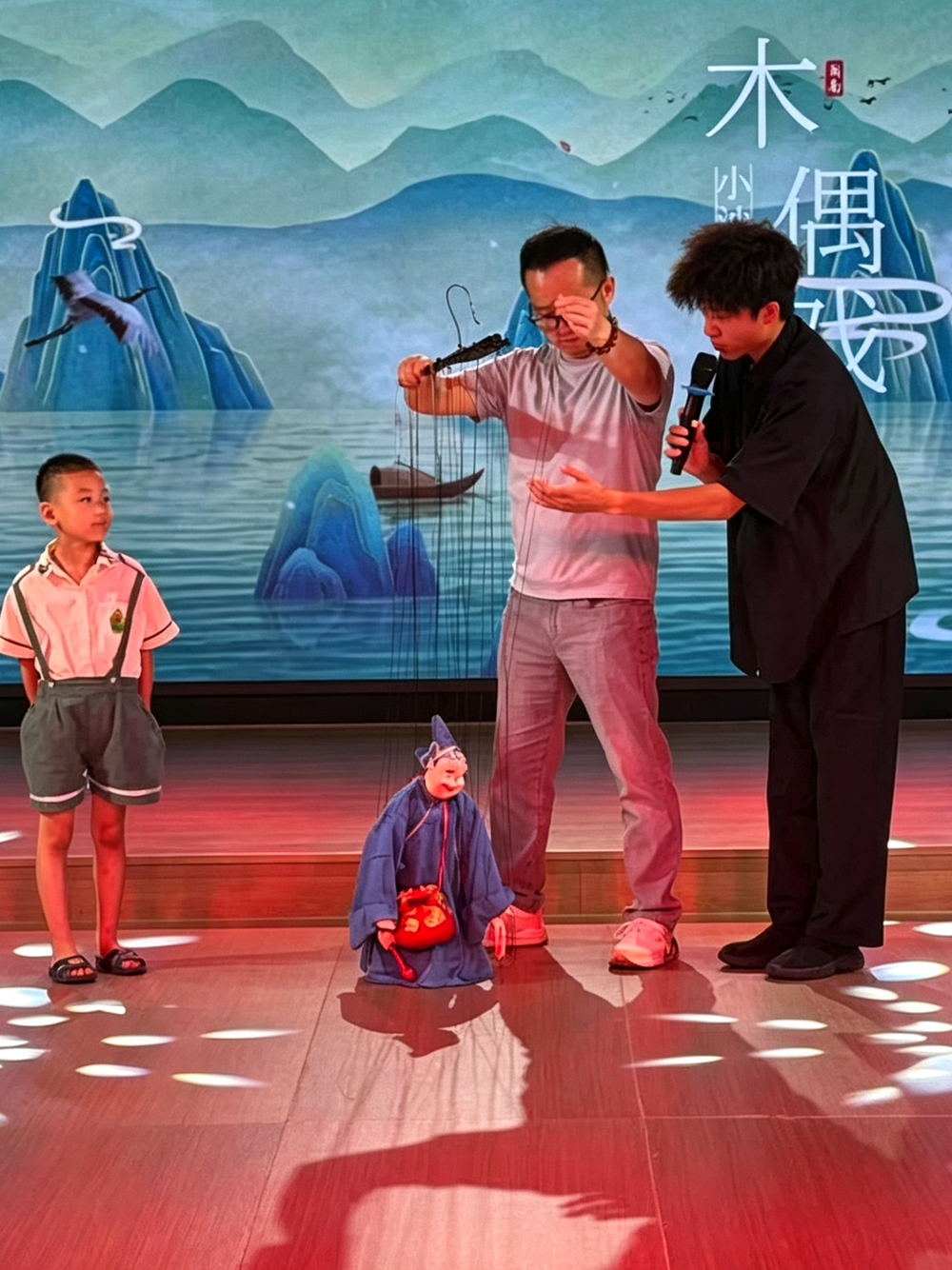
Diners can watch string-puppet theatre while they eat
'I have worked for years on bringing old houses back to life, and I have always believed that an old mansion is not simply an old building to look at, and intangible heritage is not an old tradition to be shelved,' says Wang Changlan, who runs the Kaiyuan mansion. The idea behind the space, she says, was to ground culture in everyday life. 'Many visitors come to Quanzhou only to walk the lanes and take photographs, and find it hard to feel the local culture deeply. So we have combined several uses - dining, lodging, tea, heritage experiences and arts displays - so that visitors will sit down, settle in and immerse themselves, and experience a Quanzhou culture that is more varied and more three-dimensional.'
The former residence of Su Tingyu, a Qing-dynasty official's mansion, has likewise been restored and turned into an intangible heritage centre. Keeping the architectural fabric of the old house, it combines heritage displays and experiences with southern Fujian food. Nanyin and puppetry take their turn in the main hall; the side rooms hold hands-on heritage spaces; and in the courtyard tea-and-dining area visitors can taste authentic southern Fujian tea snacks, so that they can watch heritage and admire the old architecture while tasting the everyday life of the old city.
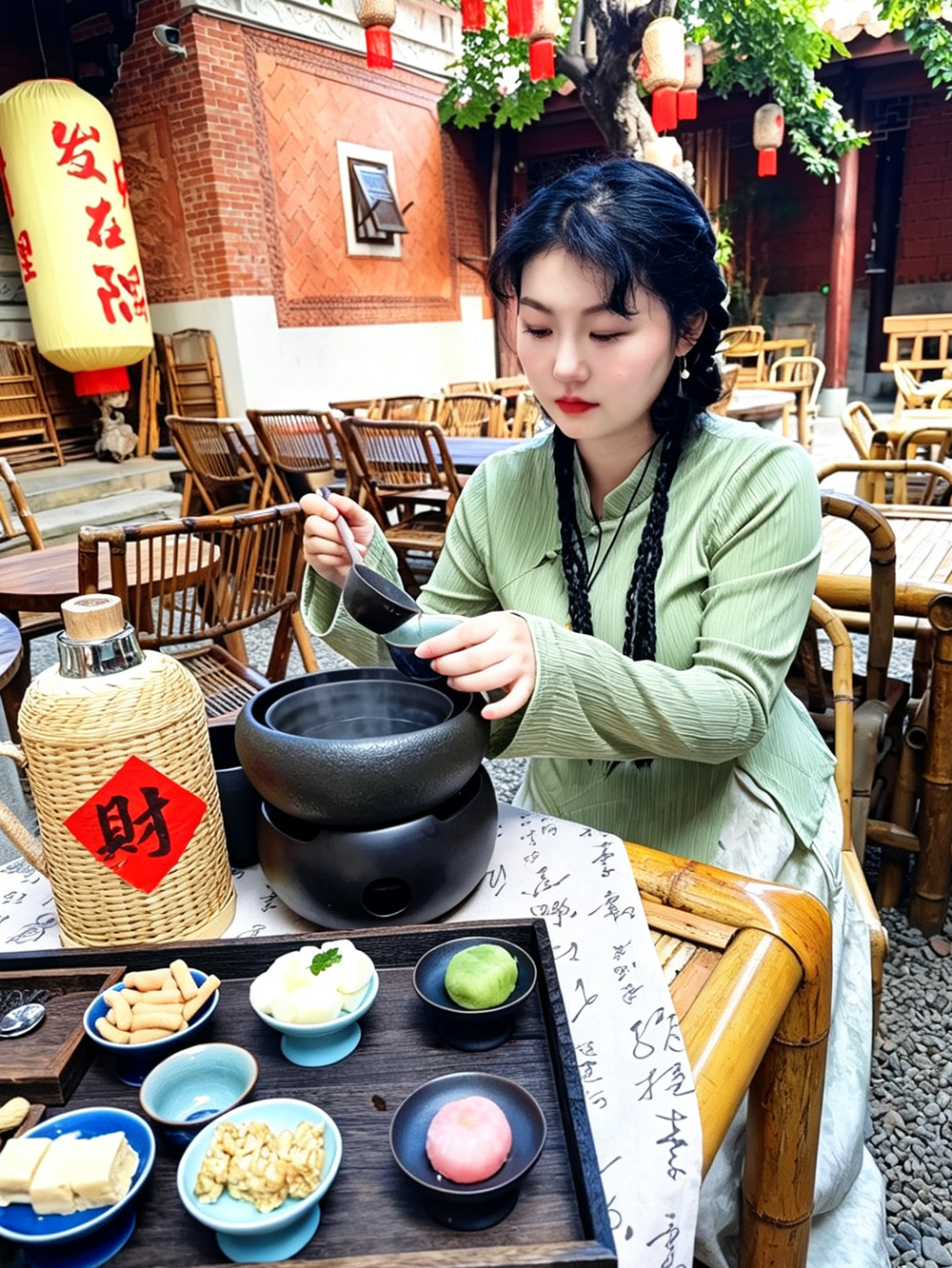
Experiencing Chinese-style tea snacks dressed in hanfu
'We work to make every setting, every performance and every experience fit the local cultural grain of Quanzhou,' says Shangguan Zhipeng, who runs the space. Song-dynasty tea-whisking, hanfu gatherings, Nanyin and puppetry, food served in an old mansion - all the elements support one another, so that visitors come to understand intangible heritage in the middle of everyday life and carry the culture forward through relaxed experiences. His aim, he says, is to make this a creative cultural space for the old city: not just a place that displays exhibits, but one where heritage, food and historic architecture live together, and where visitors can sit down and touch the culture of southern Fujian at first hand. Today many visitors finish the exhibition and settle in the courtyard for a rest, feeling the living culture of World Heritage Quanzhou between one dish and one song.
The revival of old, run-down mansions is a vivid miniature of how Quanzhou is bringing its intangible heritage to life. Thousand-year-old buildings carry century-old traditions; one meal and one cup of tea play out a thousand years of culture. Tradition meets the new, classical elegance meets everyday life, and once-silent lanes and old houses become new city spaces that pass on heritage, hold visitors and warm the heart.
Building intellectual property from local culture
Quanzhou is mining its local culture for intellectual property, bringing elements of historic architecture and coastal folkways into dining and consumer settings. Symbols such as the dishuishou rain-drip spouts and the culture of the Hui'an women have stepped out of the back lanes and into the public eye, finding new energy in fashionable forms and helping to build a tourism pattern that spans the whole city.
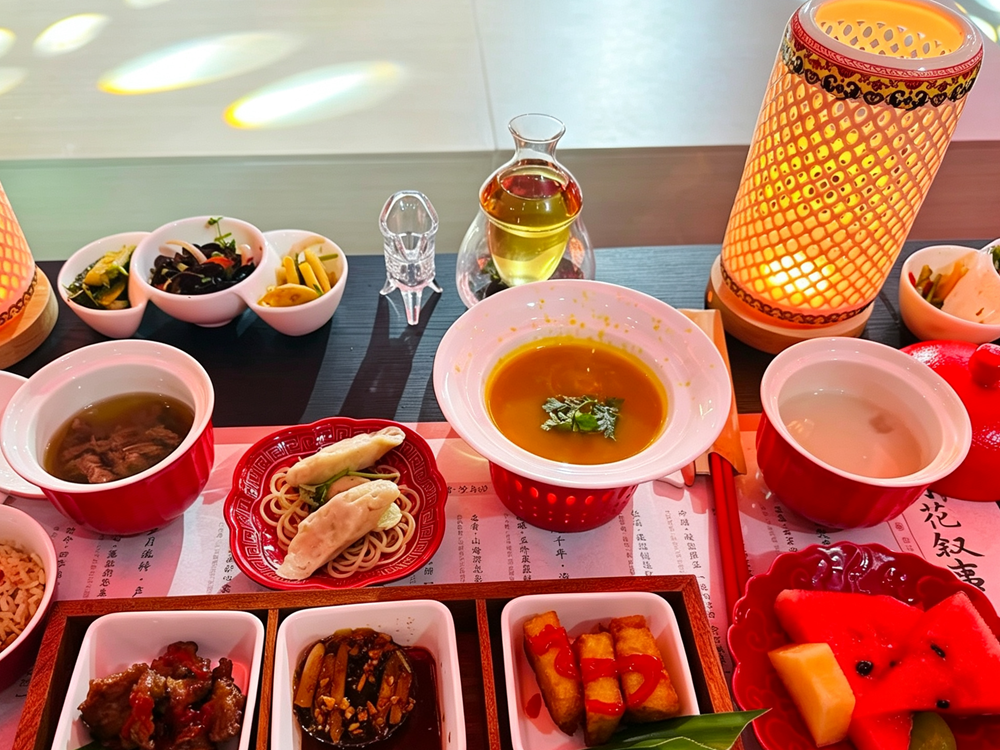
Creative heritage-inspired dining
The dishuishou is an architectural motif unique to Quanzhou's old houses. For centuries these varied little figures have stood quietly on the city's eaves. They are drainage fittings, but they are also cultural totems through which the people of southern Fujian pray for good fortune and protect their homes, carrying their hopes. Now this distinctive architectural symbol has crossed over into dining and become a new calling card for Quanzhou tourism. At the dishuishou-themed restaurant beside Chaotian Gate, the whole design recreates the look of a southern Fujian mansion: the dishuishou appears in wall murals, ornaments, table settings and light fittings throughout. Classic forms - qilin, goldfish, auspicious beasts - are all represented, restoring in full the heritage beauty of the old eaves. Diners sit at table with fine mountain-and-sea food below them and lively dishuishou above; a single meal becomes an immersive experience of the city's architectural culture.
On Quanxiu Street, the third floor of Leyiduo Coffee has been made into a dedicated dishuishou-themed café, pairing this piece of architectural heritage with modern coffee culture. In a clean, refined space, dishuishou motifs run through every detail; vintage red-brick colour schemes are matched with contemporary soft furnishings, giving plenty of old-world character without losing youthful energy. Young people pose with their coffee in this heritage setting and learn about historic architecture in slow time, letting a thousand-year-old tradition enter daily life in a youthful form. 'I used to walk past the old houses and just think the dishuishou looked nice, without knowing the meaning behind them,' says Zhang Hao, a visitor seeing the café's design for the first time. 'I never expected an old architectural element to combine so cleverly with coffee. Drinking coffee while learning about Quanzhou's historic architecture is offbeat and distinctive - it has completely changed how I think about traditional culture here.'
Turning to Hui'an on the coast, the folk culture of the Hui'an women - one of Quanzhou's most representative coastal heritage traditions - is also being renewed. To bring it into a dining setting, the Hui'an Women's Folk Customs Park has created an experiential folk restaurant, mixing Hui'an women's dress, traditional handicrafts and coastal food, and unlocking a new way of doing 'heritage dining'.
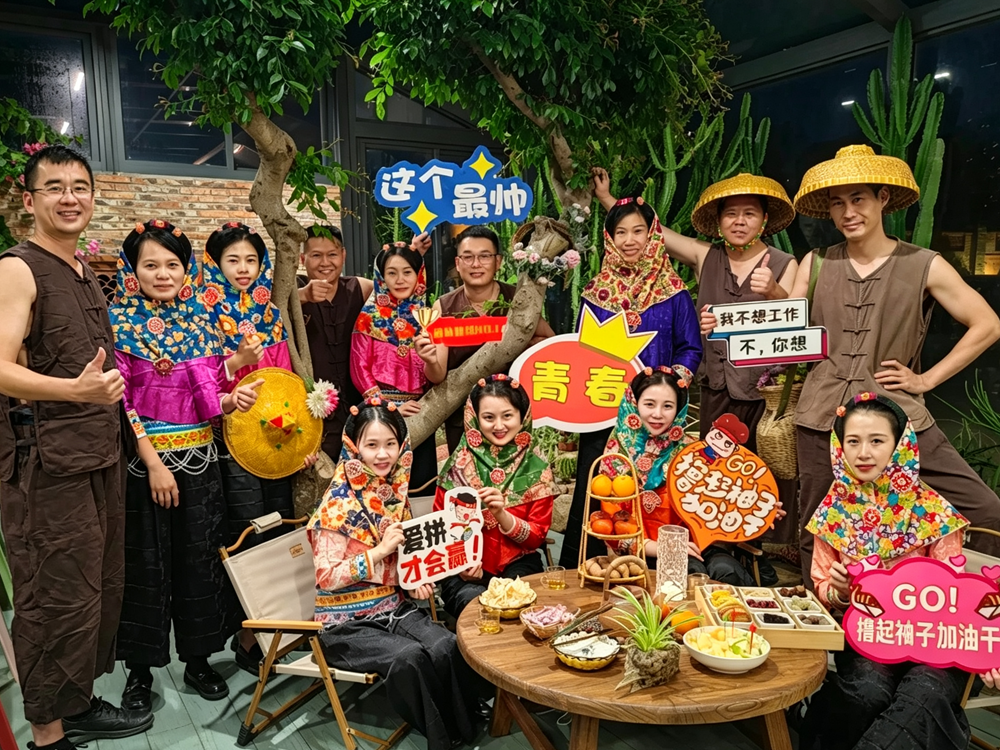
Dressing up in Hui'an women's costume at the restaurant and taking photographs
Inside the restaurant at the Hui'an Women's Folk Customs Park, the atmosphere of a coastal fishing village hits you at once. Visitors can dress in classic Hui'an women's costume - a short blue blouse, a pieced headscarf and wide trousers - recreating the hard-working, plain style of the Hui'an fishing women, and photograph themselves by a seaside table, capturing the coastal heritage in a picture. Between courses they can try a traditional craft for themselves, making 'Huinü zhuizai' ornaments, and feel the appeal of old fishing-village skills through hands-on work. On the table, fresh seafood and home-style fishing dishes arrive fragrant. One taste of the coast, one set of heritage costume and one craft experience unlock the coastal heritage culture of Hui'an from every angle. 'As a Quanzhou native I grew up hearing the stories of the Hui'an women and seeing their way of life, but this was the first time I had immersed myself in their costume and handicrafts while eating,' says Ms Lin, a local resident. 'This model makes intangible heritage feel less remote; adults and children can all take part and all feel it. It is a very meaningful way of passing culture on.'
Reporter's note
everyday vitality fills the stomach; culture nourishes the heart
A city's everyday life conceals its culture; a single feast reveals its intentions. Looking across Quanzhou's experiments in heritage dining, it is not hard to see that the tourism wisdom of this thousand-year-old city lies in holding on to detail while innovating.
Food is the best bridge to a culture, and everyday life is the warmest carrier of it. Rather than simply piling on elements, Quanzhou's innovation in dining and tourism stays rooted in local culture. Every creative dish, every setting, every folk performance and every hands-on activity carries the depth of the old city's culture, letting visitors feel the warmth of Quanzhou through their taste buds and understand the appeal of a World Heritage city through immersion.
The kitchen smoke never stops, and neither does the passing on of tradition. Today's Quanzhou is using creativity as its pen to keep writing new chapters in the integration of culture and tourism. Before long, one can expect, more local culture will cross over into everyday life, so that a thousand-year-old culture lives on in the bustle of the streets, and World Heritage Quanzhou keeps both its ancient refinement and its new energy. (By Wei Jinglin)
 Return List