
- Updates
- News
QUANZHOU, 1 September (Quanzhou Online) — By reporter Zhang Suping. The Fujian Provincial Department of Culture and Tourism has released the province’s second provincial-level Recommended Catalogue for the Integration of Intangible Cultural Heritage and Tourism. Three Quanzhou ICH items have been included: the Dragon Boat Festival Customs of Shishi Cross-Strait Ferry Rituals, the Shundetang Aged Vinegar Brewing Technique of Yongchun, and the Traditional Solar Evaporation Technique for Fujian Sea Salt (Quanzhou).
The catalogue was formulated after careful review and selection of nominations submitted by local authorities and organisations. It comprises 25 representative ICH items covering folk customs, traditional craftsmanship, traditional fine arts and other categories, showcasing the richness and uniqueness of Fujian’s intangible heritage resources.
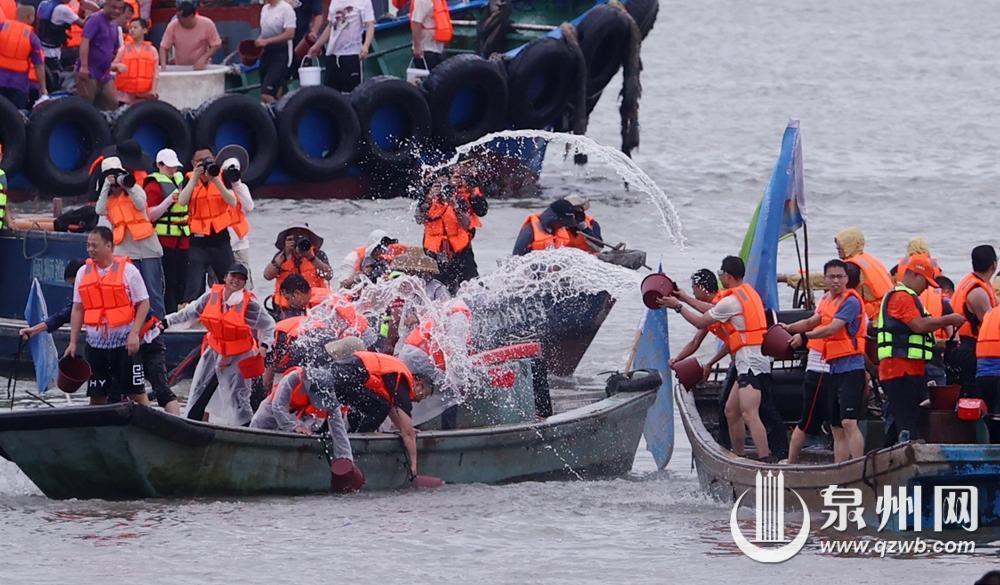
The Dragon Boat Festival sea-splashing celebration at Hanjiang, Shishi. (Photo by Wang Bofeng)
The Dragon Boat Festival customs of cross-Strait boat races between Fujian and Taiwan are a local folk tradition of Shishi city in Fujian province. They began in the Ming dynasty (1368-1644) and flourished under the Qing dynasty (1644-1911). At their heart are the activities held during the festival by people on both sides of the Taiwan Strait - at Hanjiang in Shishi and at Lugang in Taiwan, China - among them cailian (lotus-gathering songs), water-splashing at sea, dragon-boat racing and duck-catching.
These customs rest on a solid foundation of tourism integration. Visitors can join immersive activities such as sea water-splashing and dragon-boat racing, visit historic sites including the Cross-Strait Boat Race Culture Museum and the cross-Strait passage stele, and take part in folk rituals such as floating the wangchuan, a ceremonial spirit boat sent out to sea. The project links Quanzhou's World Heritage sites with coastal scenery routes to create 'ICH + festival + seaside' themed tours. Built on the shared culture of the two shores and a distinctive maritime folklore, it draws visitors from both sides of the Strait, stimulates spending and supports cross-Strait exchange.
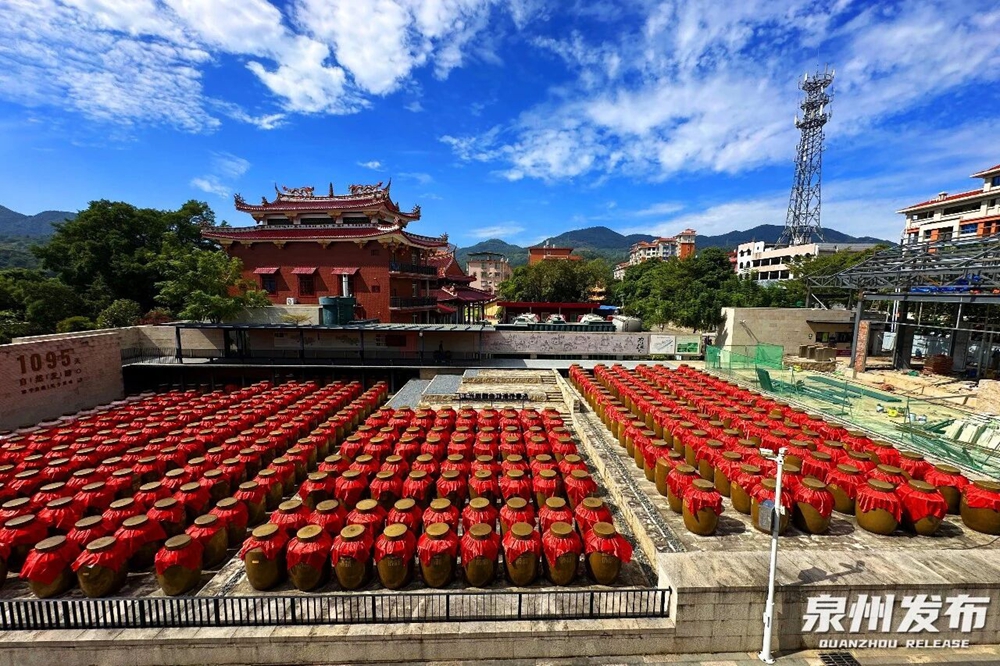
Yongchun has put idle State-owned assets back into use through its ICH vinegar-brewing technique, building tourism around aged vinegar. (Photo by Chen Xiaoyang)
Yongchun’s aged vinegar brewing technique dates back to the early Northern Song dynasty (960–1127). Building on this ICH craft, the county has developed multiple vinegar-culture complexes, including the Yongchun Aged Vinegar Creative Park and the Shundetang Aged Vinegar Creative Park. These venues host demonstrations and hands-on sessions where visitors learn about vinegar culture and brewing techniques, make their own vinegar biscuits and vinegar drinks, and taste specialities such as vinegar beverages and vinegar ice cream. These experiences are integrated into tourist itineraries, while a wide range of vinegar products are sold at scenic spots and local commercial blocks. This model enables the inheritance of the brewing craft, the promotion of vinegar culture, and the integrated development of heritage tourism.
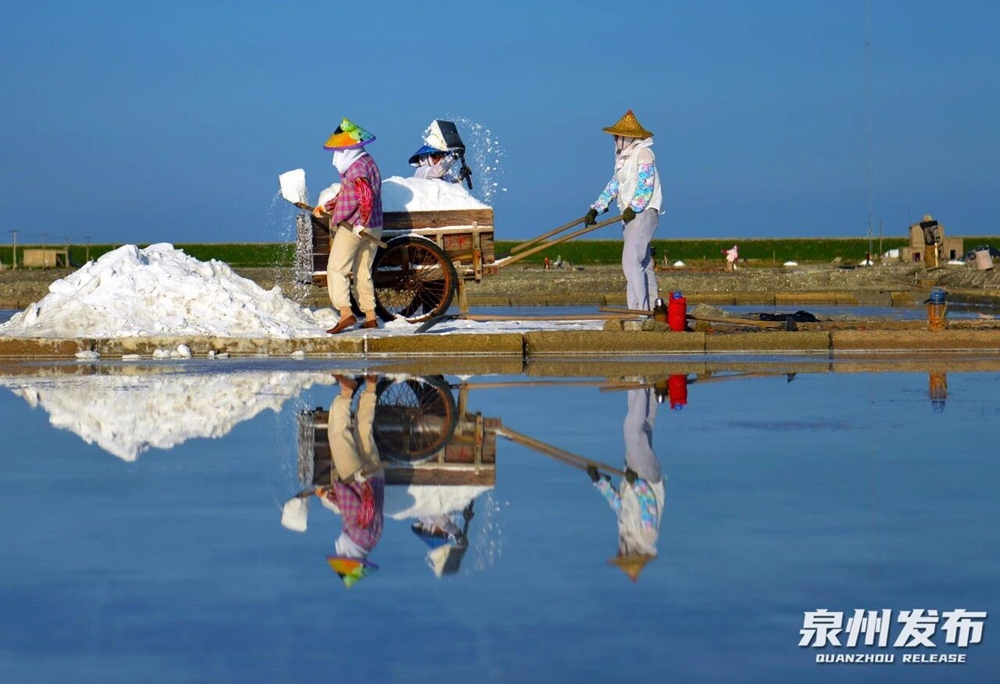
The Shanyao salt pans in Quangang district, where heaps of salt lie like snow. (Photo by Zhuang Lixiang)
The Traditional Solar Evaporation Technique for Fujian Sea Salt (Quanzhou) is anchored in the pristine landscape of salt pans, centred on the century-long history and ICH salt-making craft of the Shanyao Salt Works. It demonstrates the full sequence of traditional procedures: tide intake, brine preparation, crystallisation, stirring salt crystals, raking and harvesting, and stacking salt mounds.
The project runs an ICH training institute and permanent hands-on experience venues. It brings thousand-year-old salt-making culture to life through immersive, experiential and everyday scenarios. It has developed study tour programmes integrating interdisciplinary science popularisation, craft practice, artistic creation, patriotic education and sea-salt gastronomy. While safeguarding and transmitting the traditional craft, it has evolved into a distinctive coastal tourism destination combining sightseeing, educational study tours, leisure and cultural engagement.
The release of this catalogue aims to inject vibrant cultural momentum into tourism development across the province. The Fujian Provincial Department of Culture and Tourism will guide stakeholders to strengthen resource coordination, and further integrate ICH items with scenic spots, study tours, cultural and creative industries and other sectors into contemporary life. It seeks to develop a portfolio of integrated “ICH-plus” products that are experiential, shareable and adaptable for commercial use, steadily expanding the breadth and depth of heritage-tourism integration, so that local residents and visitors alike can experience the charm of the Fujian way of life.
 Return List