
- Updates
- News
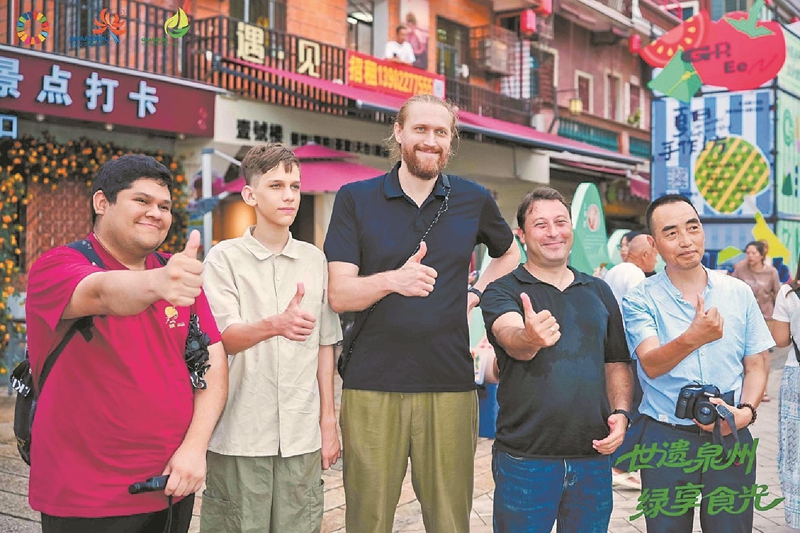
The Green Sustainable Gastronomy Festival receives wide recognition from industry practitioners and local residents
Text and Photos by Wang Yujing, Integrated Media Journalist. Correspondents: Ye Guanqing, Li Jia, Yang Hua
Sustainable Gastronomy Day is an annual UN observance held on 18 June and established through UN General UN General Assembly Resolution Resolution. Aligned with this official global initiative, Quanzhou has hosted its first city-wide Green Sustainable Gastronomy Festival guided by four core developmental pillars: sustainability, eco-friendliness, health standards and indigenous local cultural identity. The event adopts an integrated operational framework combining a central municipal flagship activity with distributed satellite events in all districts. A total of 42 themed sessions were carried out across the city. The aggregated value of food, cultural and creative goods, and lifestyle consumption exceeded 120 million RMB, while cross-platform media exposure reached more than ten million cumulative impressions.
As an official member of the UNESCO Creative Cities Network City of Gastronomy, Quanzhou takes this UN-designated observance as an opportunity to spread eco-friendly culinary concepts. The festival centers on four key development directions: low-carbon cooking technologies, food waste reduction, medicinal and edible folk wellness culture, and the inheritance of Maritime Silk Road heritage. Four flagship programmes ran parallel to the opening ceremony, including the Xu Culinary Line Star Chef Gala, cross-district specialty bazaars, a national catering industry summit and public welfare catering activities. The event delivers multi-dimensional benefits covering cultural heritage preservation, industrial upgrading, balanced livelihood support and international cultural exchange. It forms a replicable practical model for advancing sustainable gastronomy among cities in China.
Sustainable Gastronomy Integrated Into Urban Grassroots Life
South Ancient Street beside Luoyang Bridge served as the primary venue for the festival and attracted large crowds of local residents and visitors during the busy summer period.
The official opening ceremony took place on 18 June. The whole event followed the low-carbon, resource-saving and health-focused values promoted by Sustainable Gastronomy Day. Three landmark outcomes were released at the launch. They included the first printed compilation of Quanzhou's gastronomic historical archives, unified visual identity standards for the UNESCO Creative Cities Network City of Gastronomy brand, and a city-wide joint commitment to green cooking signed by all local catering operators.
The main venue gathered 36 high-quality vendors and 38 unique exhibition booths displaying hundreds of intangible heritage snacks, medicinal wellness dishes and Southeast Asian fusion cuisine. Three themed exhibition zones were arranged to interpret layered connotations of sustainable gastronomy.
World Heritage Gastronomy Zone: Silhouette murals of ancient Quanzhou record thousands of years of cross-regional food communication along the Maritime Silk Road.
Hongshan Pengzu Medicinal Food Zone: It interprets time-honored Minnan cultural traditions linking herbal ingredients and daily food.
Sustainable Cooking Interactive Zone: Interactive games are used to popularize methods for food waste reduction, low-sodium diets and seasonal ingredient selection.
The thousand-year heritage ancient street creates a harmonious integration of traditional folk catering customs and modern low-carbon dining ideas, presenting vivid grassroots scenes that define the core charm of the festival.
The Xu Culinary Line Star Chef Gala opened on the evening of 18 June with three central guiding ideas: full respect for food resources, balanced inheritance and innovation, and low-carbon industrial progress. Four second-generation disciples of the Xu Culinary Line, a well-known local Minnan cooking heritage lineage, held a formal apprenticeship ceremony. They took an oath to respect raw materials, maintain professional ethics and polish cooking skills to cultivate young practitioners of Minnan cuisine. The gala launched an exclusive seasonal feast made entirely from local seasonal ingredients via low-oil and low-sodium cooking techniques. It combines Quanzhou's millennial culinary wisdom of eating with the seasons and making full use of every ingredient with internationally recognized sustainable catering standards. Supporting activities such as green cuisine seminars and catering enterprise cooperation signing ceremonies laid a solid industrial foundation for the low-carbon transformation of local food sectors.
A highlight of the municipal flagship activity lies in its innovative charity consumption mechanism. All participating merchants donated ten percent of their operating revenue to a special welfare fund to support elderly residents living alone and disadvantaged groups. The city also launched the Low-Sodium Healthy Eating Community Programme, which invites national-level master chefs to deliver free home cooking lessons featuring light Minnan recipes. The programme plans to cover one hundred urban communities. It extends healthy and low-waste dining habits beyond festival activities into residents' daily lives and endows catering culture with both grassroots warmth and social responsibility.
City-Wide Coordinated Consumption Ecosystem
Guided by the municipal flagship event, each county and district developed distinctive catering consumption scenes based on local tourism, industrial and folk cultural resources. The city formed a synchronized, full-coverage consumption pattern as follows.
Licheng District built an immersive Dragon Boat Festival market along Zhuangyuan Street. It distributed cultural sachets shaped like zongzi, glutinous rice ritual dumplings, and displayed eco-friendly agricultural products from all parts of the city.
Fengze District launched medicinal food consultation services and national trend food carnivals to boost passenger flow driven by sports events.
Quangang District hosted a Better Life Festival combining night economy operations and sports viewing activities.
Shishi City constructed cross-strait food bazaars tied to the Minnan-Taiwan River-crossing Cultural Festival. The event coordinated more than ten intangible heritage projects including water splashing rituals and dragon boat races.
Jinjiang ran a one-month cultural tourism carnival that attracted one hundred thousand visitors.
Nan'an arranged food markets and crayfish music festivals alongside the World Dragon Boat Tournament, gaining over ten million online viewing volumes.
Huian integrated zongzi-making folk customs with charity work and delivered handmade glutinous rice dumplings to vulnerable households.
Anxi released a city-wide printed food guide and illustrated map of intangible heritage, covering twenty-nine categories of local traditional cuisine.
Yongchun hosted a Dragon Boat Food Fair at Wuli Ancient Street with strict rules for low-oil and additive-free cooking, drawing thousands of participants.
Dehua held themed exhibitions of Michelin tableware and offered traditional food culture courses in local schools alongside ceramic displays.
This cross-district integrated model deeply connects green gastronomy with cultural tourism, sports, cross-strait communication, ceramics and rural industries. It stimulates consumption demand in both urban and rural areas, expands external sales channels for local eco-friendly raw materials and promotes diversified upgrading of Quanzhou's catering formats.
Gastronomy as a Medium for Global Cultural Dialogue
The festival is far more than a series of market activities and carries profound strategic value aligned with global sustainable development frameworks.
Eros, an Italian photographer who has lived in Quanzhou for eleven years, tracked all festival activities and shared his observations. He stated that Quanzhou is a vibrant city with a clear long-term sense of global responsibility. Every detail of the event delivers on international commitments to sustainable food systems, from the promotion of local eco-ingredients and city-wide campaigns against food waste to optimized low-carbon kitchen technologies and regular community health education. A genuine UNESCO City of Gastronomy offers more than delicious dishes and bears long-term ecological responsibilities for the planet.
Timed around the Dragon Boat Festival consumption peak and consistent with global sustainable development consensus, the festival embedded low-carbon standards into all catering operation links through industry self-regulation. It revitalizes thousands of years of Minnan catering heritage and provides a replicable development model for creative food cities worldwide. The city built a multi-dimensional publicity matrix integrating official media, local lifestyle creators and overseas social platforms. Provincial and municipal mainstream media, one hundred local bloggers and overseas social accounts simultaneously released relevant content. Related topics accumulated more than ten million cross-platform impressions and presented Quanzhou's World Heritage and green catering stories to global audiences.
Quanzhou's inaugural Green Sustainable Gastronomy Festival serves as a landmark cultural intellectual property project. It was independently developed by the city to align with the sustainable catering concepts promoted by the United Nations. Looking ahead, Quanzhou will standardize the low-carbon cooking practices summarized during the festival and improve the supply chain system of local eco-friendly ingredients. The city will roll out regular campaigns advocating moderate ordering, ingredient traceability and anti-food-waste initiatives in supermarkets, physical restaurants and online food delivery platforms to embed sustainable dining into daily life. Taking food as a communication medium, Quanzhou will retain its maritime and mountain cultural origins and consolidate a low-carbon, people-oriented development foundation. Inclusiveness, frugality and health will become permanent core features of the high-quality development path for the City of Gastronomy. The city will continue to share China's ancient culinary philosophy of harmony between humanity and nature as well as the universal idea of treasuring food resources with global partners.
 Return List