
- Guide
- Flavors
By multimedia reporter Hong Nana
Hot. Hot. Hot. At he Beginning of Autumn (one of the Twenty-Four Solar Terms), high temperatures still set the tone of the weather. For most people, to beat the sweltering heat, nothing beats icy‑cold sweet treats. In Quanzhou, a host of chilled traditional sweets carry the practical wisdom of earlier generations. Refined over several generations of taste and passed down to today, some are prized for their springy, slippery texture, others for a clean, sweet finish - and all of them remain stars of the street. Look further across Fujian and each city has its own old-fashioned way of cooling down. Why not set out from Quanzhou, tasting as you go, and measure,with your tongue as the ruler, the cold, sweet memories of this region..
Into Zayton: sweet tastes on every street
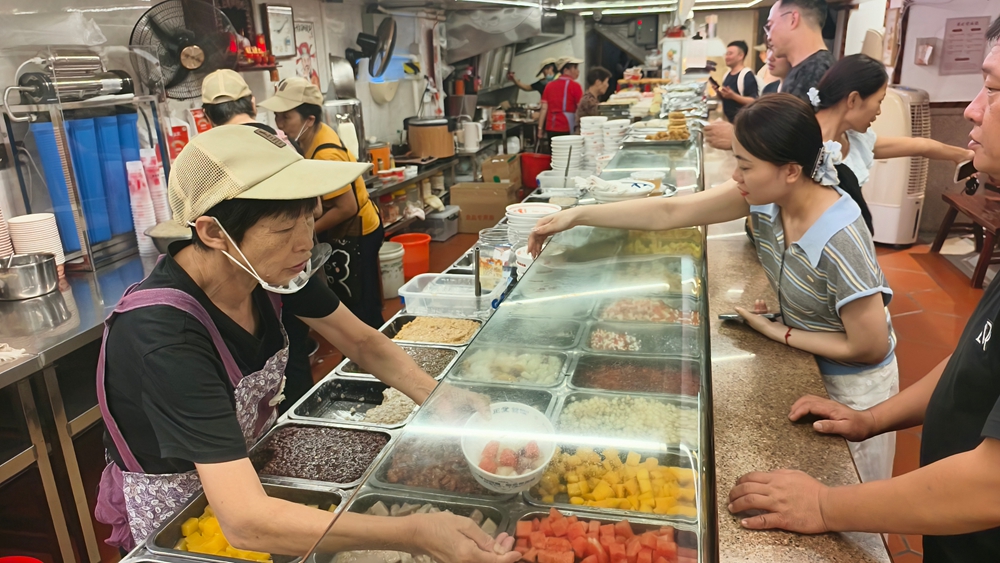
The dazzling array of toppings at a Quanzhou four-fruit soup shop. (Photo by Zhuang Lixiang)
Step into the old city of Quanzhou and the four-fruit soup shops along the streets are usually the first thing to catch a visitor's eye. 'One shihuagao, with taro, adazi (chewy cubed tapioca jelly), mung beans and watermelon!' On the counter sit the main ingredient - shihuagao jelly - and a dozen or more toppings laid out in neat rows: Job's tears, red beans, peas, snow fungus and grass jelly, alongside freshly cut fruit, a dazzling spread. Once you have chosen, the shopkeeper adds a spoonful of honey, pours in iced water, and a bowl of something refreshing is in your hands.
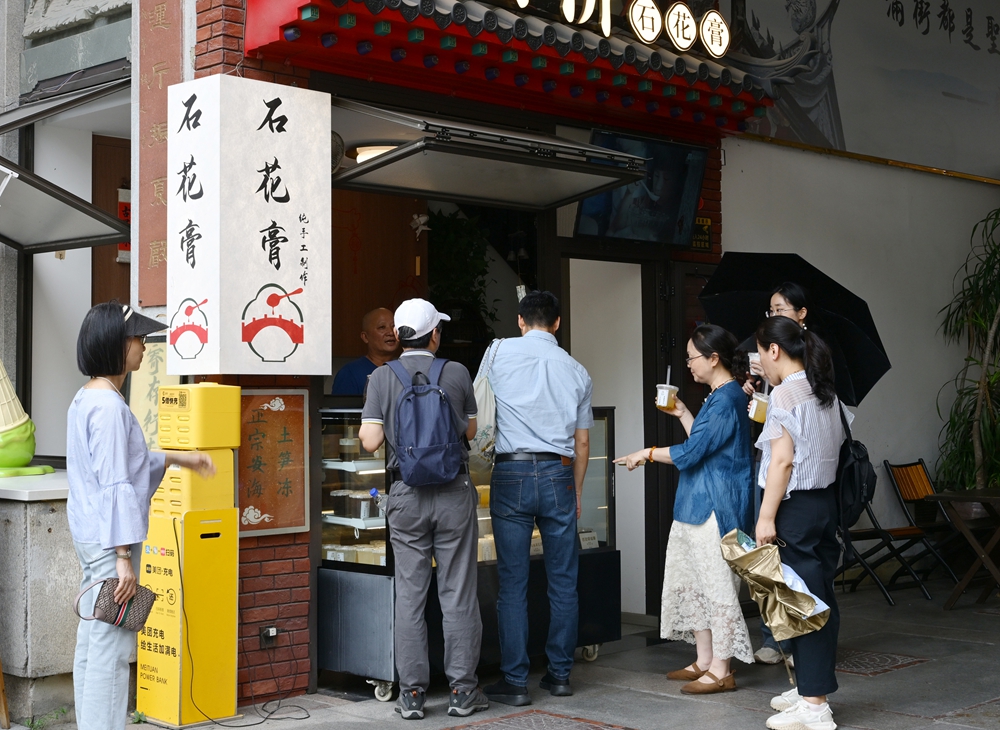
In Quanzhou, the seaweed is sun-dried and soaked six times over before being simmered into a jelly and served as a summer sweet. The picture shows a shihuagao stall at the mouth of a lane. (Photo by Wang Bofeng)
The jelly looks like smooth congealed cream and seems ordinary enough, but making it is exacting work. It is made from a seaweed that grows on the coastal rocks: the weed goes into boiling water and simmers for hours, and when the liquid has thickened it is poured into containers and left to cool and set naturally. To serve, it is scraped into long ribbons with a special comb-like tool. Made properly, the jelly is firm and springy, with the natural fragrance of seaweed. Ms Huang, a local resident, says there are many four-fruit soup shops in Quanzhou and each has its own character - 'At Ai'a Shihuagao the taro is dense and the honey is clean and sweet without being cloying; at Bingzhengtang I like to add a portion of grass jelly.' In Quanzhou this bowl of sweet soup has no fixed recipe: mix as you please and it becomes a flavour that belongs to your own journey.
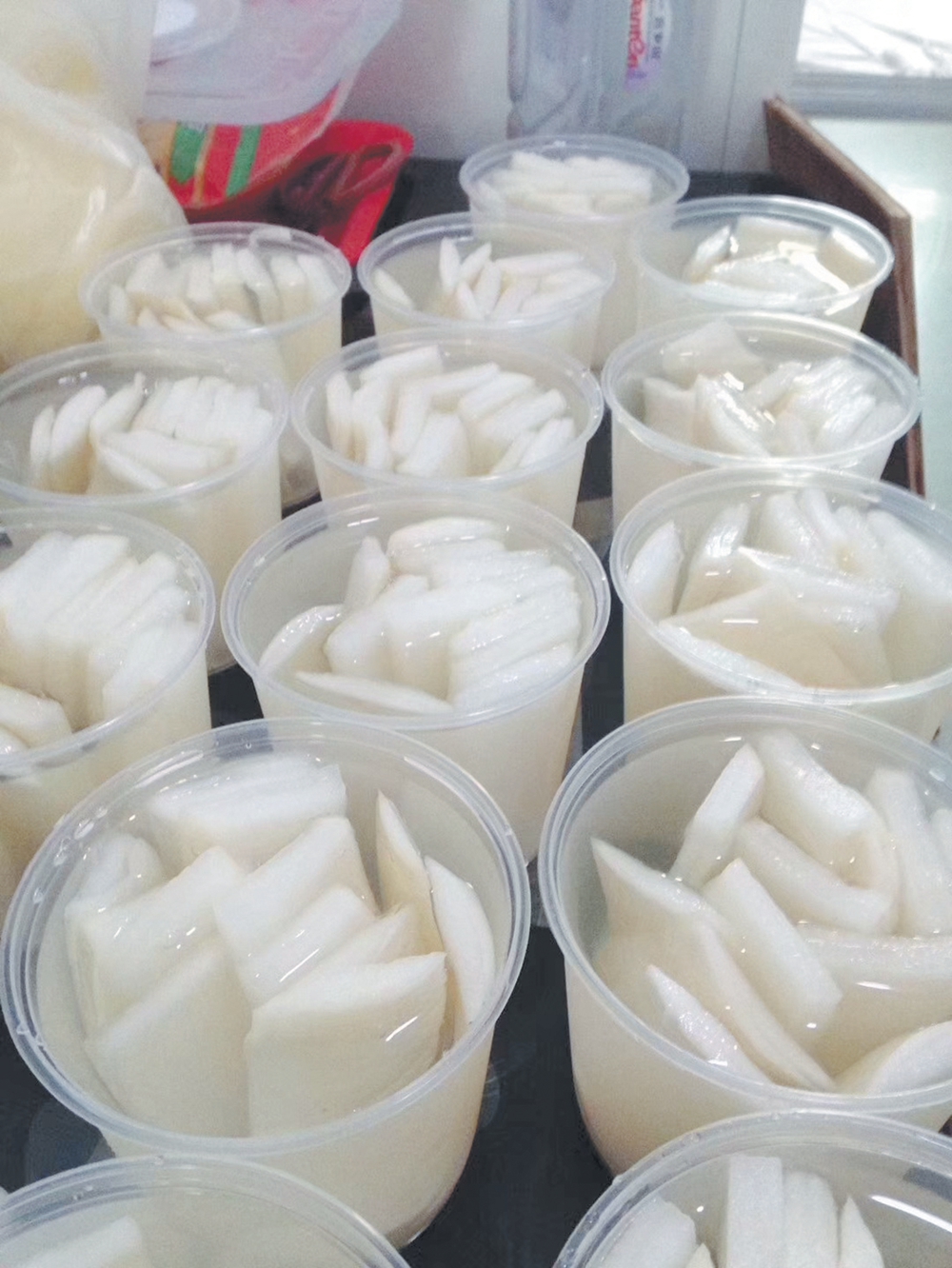
Caitousuan, pickled white radish: cool, with a sweet finish. (Quanzhou Evening News file photo)
Near Jinyu Lane, pickled white radish known as caitousuan is another local favourite for beating the summer heat. Sour, sweet, crisp and cold, it cuts through richness, and paired with carambola (star fruit) drink made the same way it forms a long-standing traditional combination - one mouthful and much of the heat is gone. In the old days families across southern Fujian made their own pickled radish as a snack for children, and in the memory of older generations, drinking the radish pickle liquid for a toothache and star-fruit water for a sore throat is experience handed down through the generations.
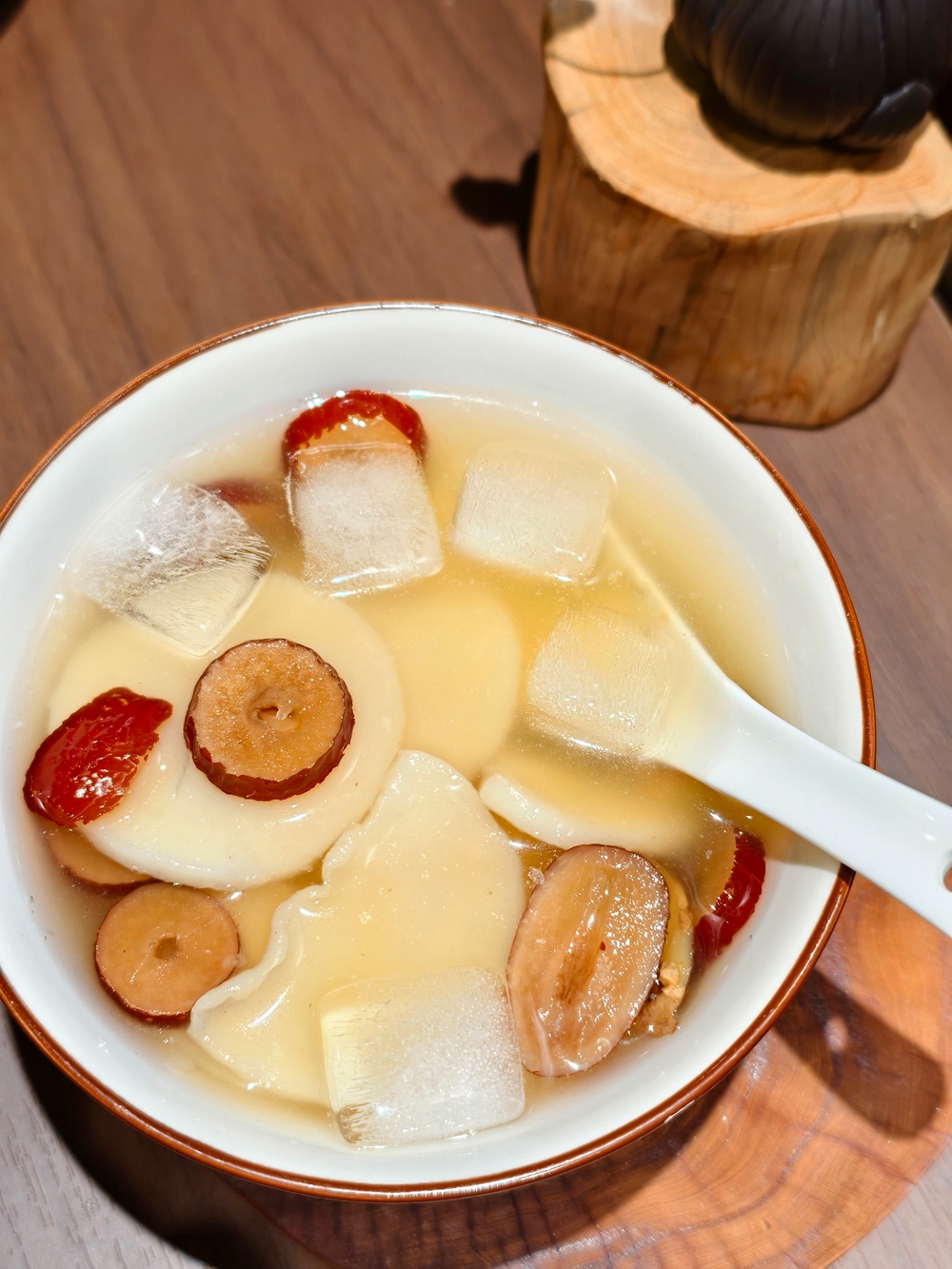
Chilled Yongchun baiqu soup. (Photo by Chen Lühe)
Not only in the old city: across the streets and lanes of greater Quanzhou, mung-bean soup, grass-jelly honey, iced soy bean pudding and Yongchun baiqu (fermented round rice cake, local Minnan summer dessert, coin-sized)are old-fashioned cold sweets that visitors highly praised by visitors. In Houxi village, Luoxi town, Luojiang district, the mung-bean soup is made by washing the beans in well water and then steaming them for an hour in a bamboo steamer over a wood fire; the result is soft and dense, and with chilled boiled water added it is wonderfully refreshing. Yongchun's speciality baiqu - 'baike' in the southern Fujian dialect - is round, white and about the size of a silver dollar; cooked, it is smooth and tender, and especially cooling and thirst-quenching in syrup. Then there is the grass-jelly honey simmered by grandmothers at street stalls, smooth and refreshing, and the soft, sweet iced soy bean pudding. They are cold, sweet, good value and cheap: when you come to Quanzhou, be sure to try them all.
Across Fujian: one city, one flavour, each refreshing in its own way
A true food lover does not stop there. Having tasted Quanzhou's old-fashioned cold sweets, why not press on north and explore the distinctive cooling sweets of Fujian's other cities. One city, one flavour; each has its own merits.
On the streets of Fuzhou, the cheerfully shaped water-chestnut cake has become a viral-hit dessert for hot summer days in recent years. It is made by mixing water-chestnut powder and chopped water chestnuts with syrup and steaming the mixture; the result is translucent tea-yellow, soft and glutinous, sweet but not cloying. A sprinkling of sesame on top is the finishing touch, and you can taste distinct pieces of water chestnut as you eat. Today, while keeping the old method, water-chestnut cake has been developed with modern cooking techniques into a range of flavours and shapes, winning over plenty of customers.
Changle iced rice is another signature Fuzhou treat. Where most places serve rice hot, this dish does the opposite, and is popular for being cooling, rich-cutting and full of texture. A bowl of glutinous iced rice comes heaped with taro balls, grass jelly, coconut jelly, tapioca pearls and red beans, plus assorted fresh fruit, and the base is not only syrup - coconut milk, milk tea and mango-pomelo-sago dessert are all options. Stir it well before eating: soft, slippery, crisp and sweetly dense layers pile on top of one another, and one mouthful is satisfying.
In Fuding, Ningde, almond tofu carries the taste memories of many people. Even with the huge variety of new-style drinks available today, almond tofu still holds an irreplaceable place among the local cooling sweets. This plain-looking old-fashioned sweet is exceptionally silky: small custard-soft cubes steeped in clear syrup and dotted with a little osmanthus - simply looking at it seems to take much of the heat away. Sit down after a walk through the small city's streets and sip it, and the almond fragrance spreads slowly across the palate, clean and soothing: a gentle taste belonging to a small city in eastern Fujian.
Bili jelly (creeping-fig seed jelly made from seeds of Ficus pumila) is a traditional cooling drink from the Wuyishan area of Fujian - clean on the palate, refreshing and reviving. It is made from the seeds of the wild creeping fig, sun-processed into a semi-set jelly, and eaten with honey or sugar. It can be dressed up as you like, with diced watermelon, diced mango, crushed peanuts or honeyed red beans: a bowl brimful of ingredients and flavour, and bringing an instant sense of delight. Perhaps the most moving tastes in ordinary everyday life are often hidden in bowls of coolness just like this one.
 Return List