
- Updates
- News
□ Reporter Wang Yujing; correspondents Ye Guanqing, Chen Xiang and Lei Yingmiao (text), Chen Xiaoyang (photos)
One table, one banquet; one flavour, a glimpse of the world. As a flagship event of the 2026 Quanzhou International Gastronomy Month and a landmark cultural facility in Quanzhou's development as a UNESCO "City of Gastronomy," and coinciding with the first anniversary of Quanzhou's designation as a "City of Gastronomy," the Quanzhou Culinary Heritage Museum (International Centre for Culinary Exchange) was officially opened in Shijing Shizhou City on 1 November, with the theme exhibition "Banqueting: Culinary Traditions and Life Worlds in Quanzhou" unveiled to the public at the same time. This permanent museum rooted in local soil will become an important "banquet" gateway for reading Quanzhou's culinary humanity; anchored in taste, it lets visitors from home and abroad glimpse the millennia-old continuum of everyday life and the inclusive character of the city. More than 200 guests from national, provincial and municipal authorities, UNESCO bodies, creative-cities-network representatives from home and abroad, the culinary academic and industry communities, and media influencers gathered on site to witness the formal opening of this cultural window.
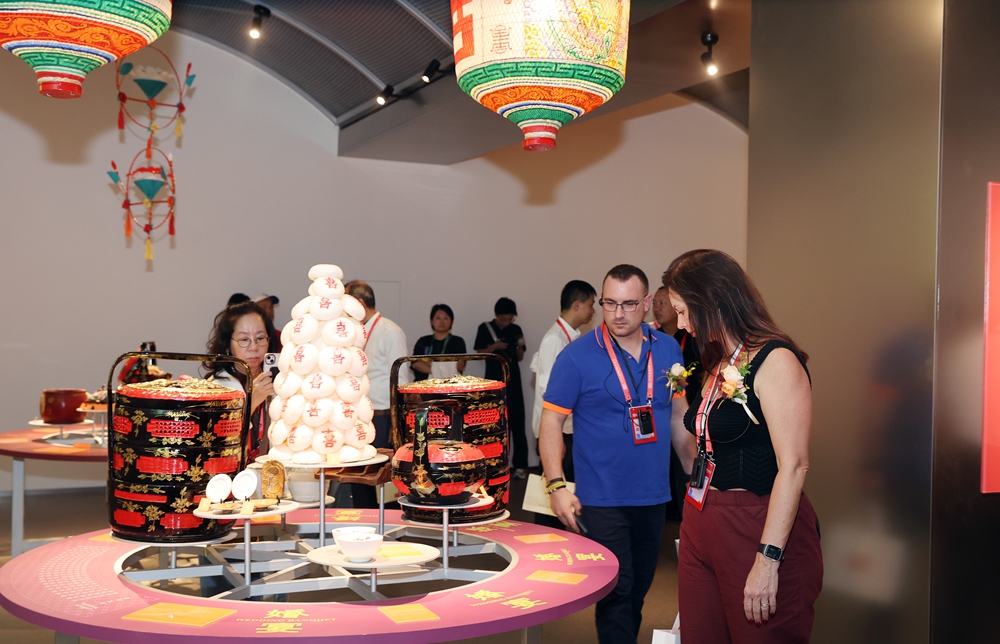
Guests visiting the Quanzhou Culinary Heritage Museum
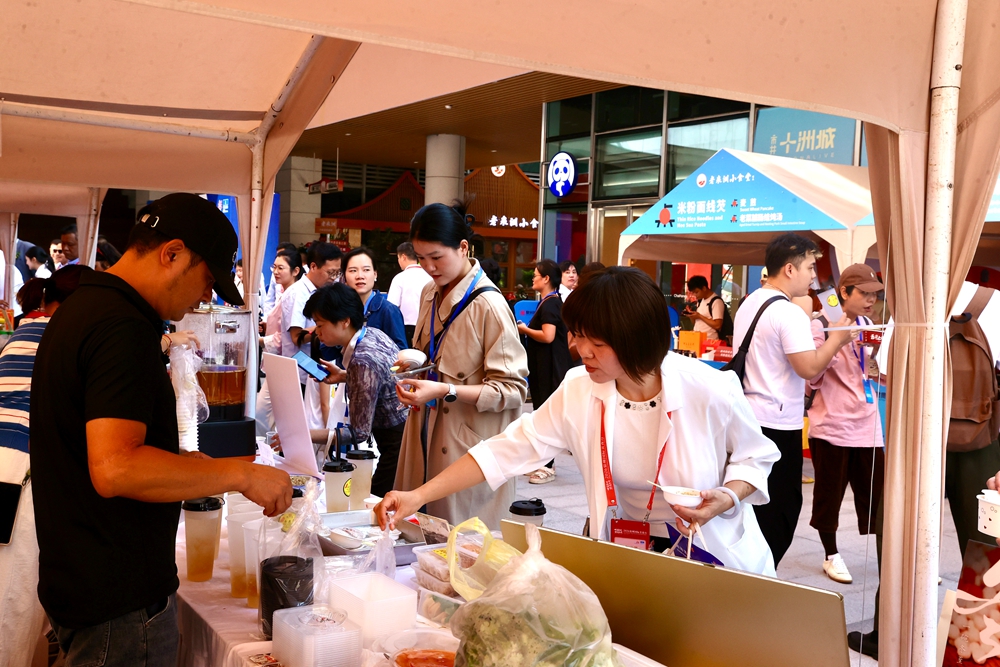
Guests experiencing Quanzhou cuisine on site
The Museum Builds Four Narrative Units
That morning, under a clear sky, worthy guests gathered in abundance. A food feature video opened by tracing Quanzhou's millennia-long culinary past. A Minnan-language jazz chorus, "Zok-phang, Zok-phang" (Aroma Fills the Air), began the event, and a simple Minnan daily greeting, "jia-boe" (have you eaten?), became the most unadorned and sincere welcome to visitors from all directions.
"Rooted in local soil, the museum uses food to tell the story of a real and tangible 'Quanzhou of the world.'" said Zhang Jiabin, Party Secretary and Chairman of the Quanzhou Urban Construction Group. For thousands of years, the sails of the Maritime Silk Routes have brought produce from all quarters, nurturing Quanzhou's unique banquet customs between mountains and sea. Driven forward by the overall coordination of the CPC Quanzhou Municipal Committee and Municipal Government and the strong support of the Municipal Office for the Development of the City of Gastronomy and the Municipal Bureau of Commerce, the culinary past and present scattered through the streets and alleys of this UNESCO World Heritage city have at last gained a humanistic "banquet" vehicle for systematic preservation and concentrated display. It is understood that during its 10-day trial operation over the National Day holiday, the museum already surpassed 2 million impressions across the entire internet.
Luo Pan, Research Fellow at the National Museum of Ethnology, China and curator of this exhibition, also shared her curatorial thinking. She proposed that food is a vivid path to the core of civilisation, and that Minnan's chizhuo — the tradition of gathering for a banquet — has never been merely eating to satisfy hunger, but an important social arena for human connection and the transmission of ritual. Although fine food is a pleasure of the palate, the museum uses hundreds of objects to build four narrative units: "A Table Through Time," which looks back on the confluence of Maritime Silk Routes flavours; " A Table for Every Season," which tells the life wisdom of taking from nature in season; "A Table for Human Life," which unfolds an ordinary person's joys and sorrows across nine life-cycle banquets; and "A Table of Old Flavours, New Tastes," which records contemporary flavour innovation.
Although the exhibition hall does not serve dishes directly, it is always devoted to awakening the taste empathy deep in visitors' hearts. Many viewers, standing before displays related to the full-moon banquet and coming-of-age rituals, naturally recall their own family feasts of the past; the flavours hidden deep in memory are reawakened — precisely the communicative effect the exhibition aims to achieve. Quanzhou's openness has never been a dissolution of itself: throughout history, exotic ingredients and customs have arrived from afar, and through the local people's selection and transformation have settled into flavours unique to this place. People of different backgrounds can share one table — this is the essence of "beauty and diversity in harmony" in Quanzhou's food.
At the event, a joint first-release, unveiling and signed-book-giving ceremony was held for Minnan Cuisine of China, Volume II: The Chengjiaban Collection and the special issue "Flavours of Quanzhou" (of Straits Photography and Visual Arts). The former rescues endangered Minnan culinary techniques and assembles more than eighty banquet and street-market dishes; the latter freezes the old city's everyday life in lens, preserving frontline culinary craftsmanship. Complementing each other, the two works leave behind a precious textual and visual archive of Minnan food; the editorial team completed an on-site book donation to the museum, and in the future more readers will be able to savour, through these works, the Quanzhou flavours behind the words and images.
After the opening ceremony, guests entered the museum in groups to view the marks of time behind each object — old mooncake moulds, export porcelain and more. Outside, the accompanying food-experience zone was rich with the steam of everyday life: beef thick soup, misua gruel, yuanxiao glutinous rice balls … authentic Minnan snacks were served in turn. The exhibition evoked old memories, while the tongue tasted present-day authentic flavours — cultural perception and real taste responding to each other here.
Open to the Public from 3 November
Taste dissipates with time, but the museum properly preserves the time, folk customs and community memory attached to flavour. The Quanzhou Culinary Heritage Museum is not a static display hall; it is a tangible window for the revitalisation of food heritage and the conduct of civilisational dialogue.
From the Song-Yuan Maritime Silk Routes commerce to the present, foreign things have been accepted and recreated here, blended into the daily tables of ordinary people. This inclusive coexistence is precisely the spiritual foundation of Quanzhou's designation as a "City of Gastronomy." The museum connects academic research at one end and the general public at the other; it both safeguards the local culinary lineage and extends an invitation to the world to take a seat. In the future, it will also bring in intangible-heritage bearers for residencies, regularly conduct study tours, food tastings and oral-history collection, and will promote overseas touring exhibitions and international academic symposia, continuously gathering the vivid culinary stories of contemporary people.
This event did not stop at the Shijing Shizhou City exhibition area. After the visit, guests travelled together to the old city's Weiyuan Tower to view the UNESCO "Forever Flavors" theme exhibition. The local banquet narrative of the new Donghai museum and the international food-heritage exhibition atop the old-city landmark echo each other across distance; the linkage of old and new spaces further amplifies Quanzhou's external influence as a City of Gastronomy.
It is understood that the Quanzhou Culinary Heritage Museum and the theme exhibition "Banqueting: Culinary Traditions and Life Worlds in Quanzhou" will officially open to the public on 3 November. Whether local residents or distant visitors, all may book online to enter the museum, and through this window touch the continuum of everyday life that has flowed from the Song-Yuan era to today, understand the inclusiveness and vitality this city hides upon its dining tables, and share a journey across time — a covenant of taste.
 Return List