
- Updates
- News
As July brings sweltering heat to Quanzhou, beating the summer warmth has become an everyday necessity for local residents. Market observations show that the city's time-honored summer cooling delicacies have been reinvented with creative twists this year, while classic local leisure spots offer refreshing new experiences. These innovative takes on traditional summer treats and pastimes have gone viral online, emerging as the most popular summer highlights across the region.
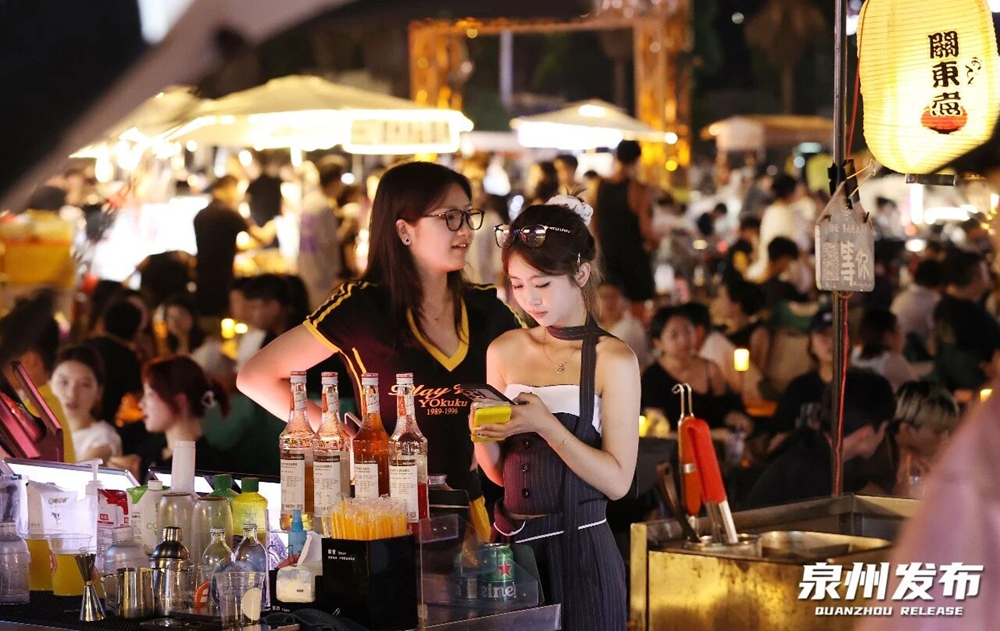
East Wild Beach in Donghai Subdistrict, Fengze District, attracts massive crowds of visitors every summer. (Photo by Zhuang Lixiang)
This summer, a host of creative chilled desserts and drinks made with authentic Quanzhou ingredients have gained soaring popularity. At dessert shops across Licheng District, lye rice dumpling ice and peanut mochi ice have become top favorites among young customers.
Lye rice dumpling ice reimagines Quanzhou's traditional alkaline rice dumplings, featuring a translucent amber appearance and a firm, chewy texture. Paired with grass jelly, tapioca pearls, brown sugar, condensed milk and fluffy shaved ice, every bite delivers rich, layered textures, blending silky ice slush with soft, chewy toppings in perfect harmony.
The classic chewy peanut mochi has also been transformed into a trendy icy dessert. Its soft, bouncy wrapper encases crushed peanuts and crispy crumbs. Served over shaved ice, it offers a delightful contrast of icy freshness and crunchy texture. Combining nostalgic local flavors with effective heat relief, the innovative treat has won huge popularity among young consumers.
Beyond shaved ice stalls, local teahouses and coffee shops have rolled out seasonal innovative drinks infused with signature Minnan cooling ingredients, including sea agar jelly lattes, peanut soup Americanos, and specialty brews with Chinese olives and wild citrus. These creations integrate time-tested local heat-clearing ingredients with modern beverage craftsmanship to deliver one-of-a-kind flavors. The refreshed Minnan cooling classics have become viral must-try summer treats for tourists on social media.
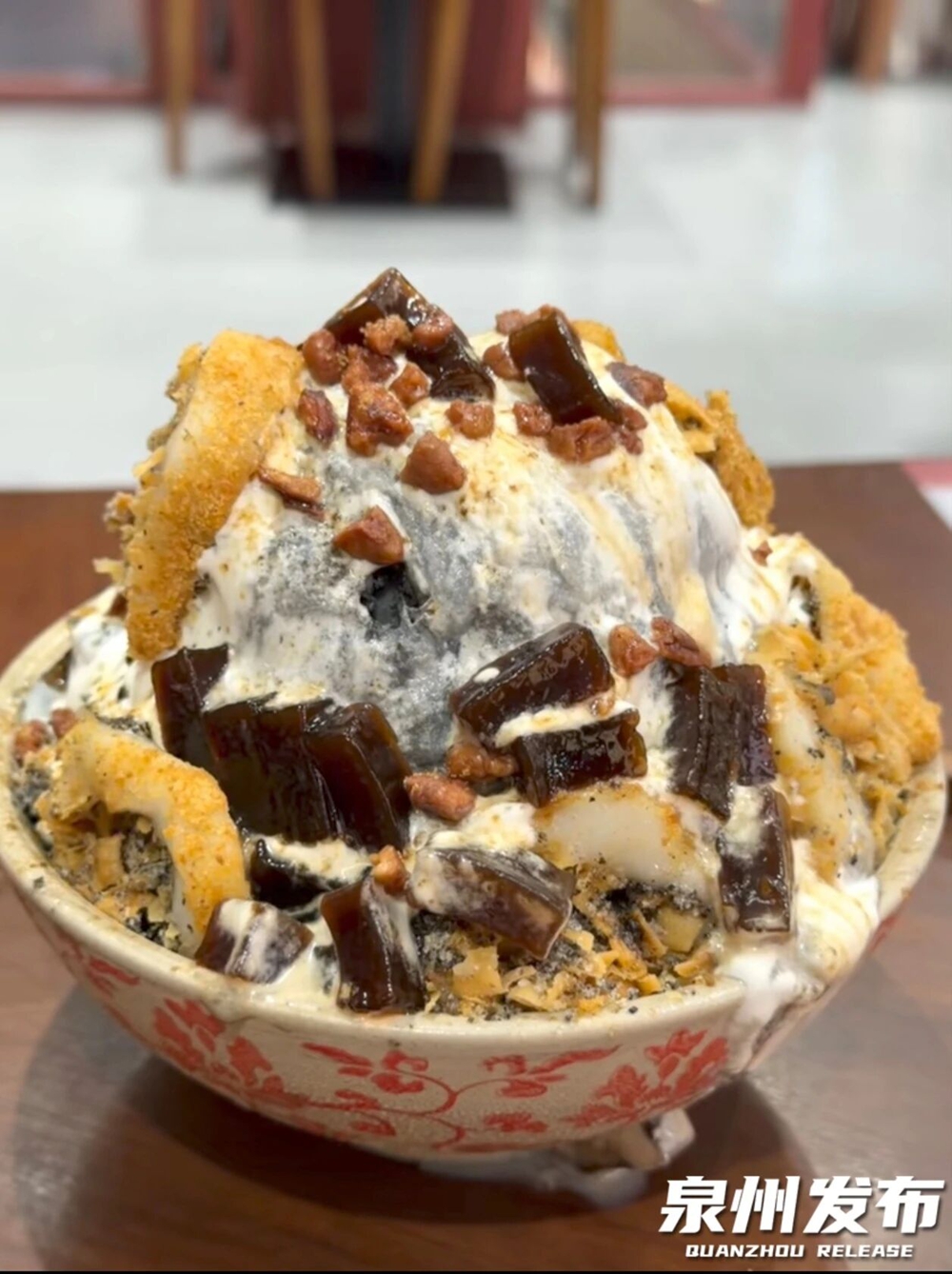
Peanut mochi with silky shaved ice (Photo provided by interviewees)
Quanzhou's summer cooling charm lies not only in its flavorful delicacies but also in a wealth of newly upgraded indoor and outdoor leisure venues for escaping the heat.
Renovated ancient Minnan courtyard residences have become trendy summer retreats for young people. Repurposed into elegant teahouses and boutique cafes, these heritage buildings feature central courtyards that generate natural cross ventilation, with tall side windows drawing in cool outdoor air. Thanks to this natural airflow, the spaces remain pleasantly cool even without electric fans.
Waterfront outdoor attractions also present brand-new cooling experiences. The Jiushixi Pastoral Scenic Area in Chidian Town, Jinjiang, has upgraded its leisure facilities with floating platforms, kayaks and water bikes, and launched floating outdoor movie screenings on the lake. Visitors can enjoy a unique cinematic experience while boating on the cool water.
While trendy new cooling experiences sweep the city, traditional Minnan chilled snacks remain timeless favorites. Four Fruits Soup, Chinese mesona jelly and sea worm jelly (local Tusundong delicacy) are tailor-made for Minnan's hot and humid climate. These classic treats clear internal heat and relieve summer discomfort, remaining indispensable summer delicacies for locals and tourists alike.
Meanwhile, Quanzhou's time-honored public welfare tradition of offering free summer cooling services is in full swing. Free herbal tea stations have been set up across urban streets, scenic spots and community service centers to provide heat-relief drinks for passersby and tourists. The 67 "Warm New Licheng" charity water stations in Licheng District are fully stocked with herbal tea cakes and dried chrysanthemums for summer heat relief.
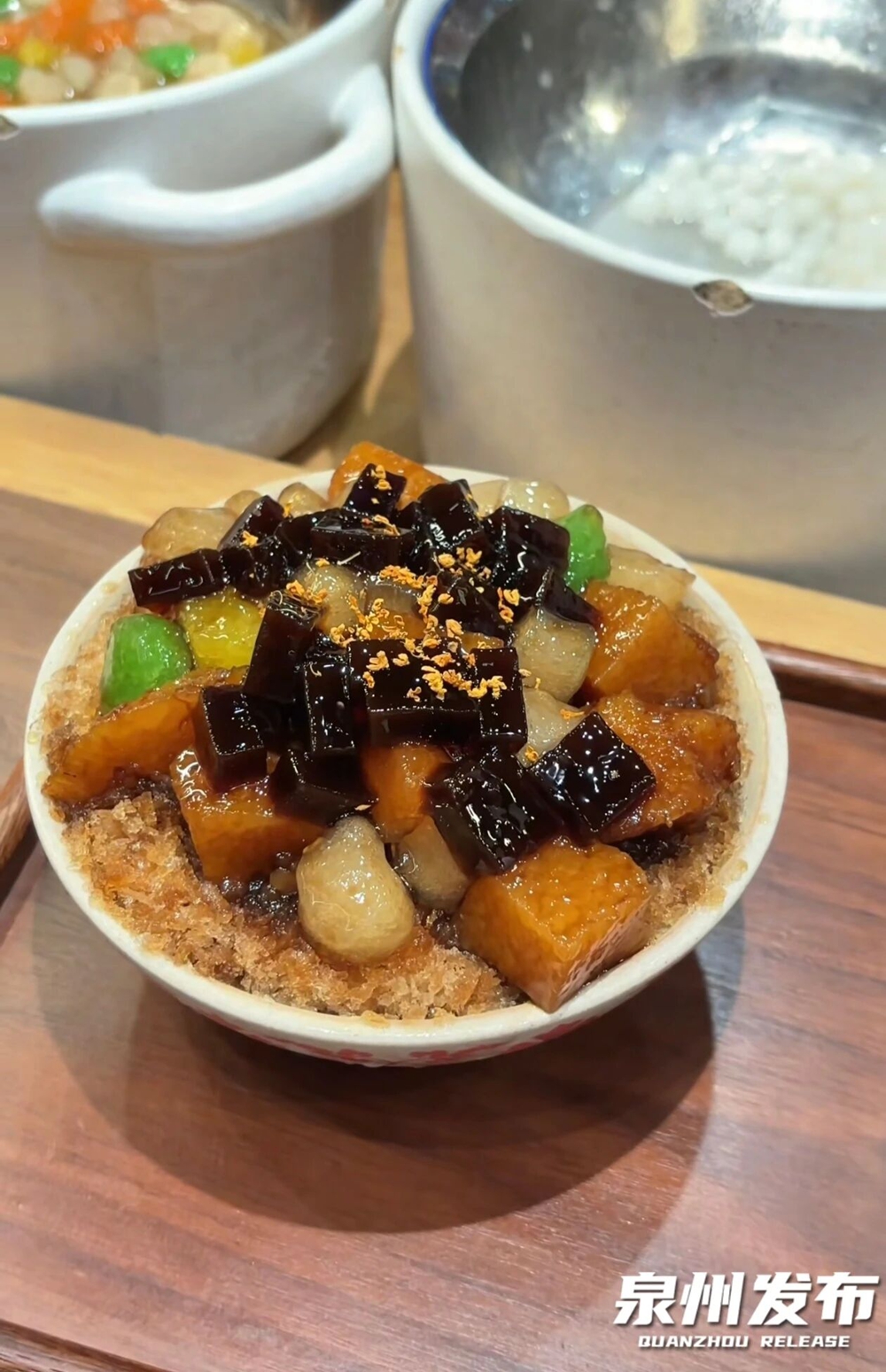
Lye rice dumpling ice (Photo provided by interviewees)
Quanzhou's wisdom of beating summer heat stretches back more than a millennium. The classic Four Fruits Soup, a nourishing blend of lotus seeds, coix seeds, mung beans and tremella, was reportedly created by Wei Jing, a female general of the Tang Dynasty, to cure prevalent heat-related illnesses among her troops. In the Song Dynasty, local Quanzhou residents chewed betel nuts mixed with clam ash to dispel dampness and summer miasma caused by the coastal climate. Ancient locals also made chilled delicacies from coastal ingredients such as sea agar. Coastal fishermen wore lightweight, breathable tuber-dyed cloth shirts to withstand intense summer heat.
Nevertheless, overconsumption of cold food and drinks poses health risks. As a well-known Quanzhou folk saying goes, "Eat radishes in winter and ginger in summer, and you will never need a doctor's prescription." In hot, humid summers, excessive cold intake can harm the spleen and stomach. Moderate consumption of warm foods helps warm the stomach, boost digestion and dispel internal dampness, allowing people to spend the summer in a healthier, more comfortable way.
When summer temperatures soar, Quanzhou showcases a perfect integration of traditional and trendy cooling lifestyles. Classic chilled local snacks dominate summer catering consumption, city-wide public welfare cooling activities continue year after year, and young people breathe new vitality into the city's summer cooling culture by reinventing traditional ingredients and heritage venues.
Trendy New Cooling Creations Take the Spotlight
"I used to associate lye rice dumplings only with the older generation. When I was little, my grandma made them every year, but they tasted plain with a faint alkaline note, even with sugar or honey. Recently, I've seen lye rice dumpling ice all over social media and decided to give it a try. It's surprisingly soft, refreshing and rich in layered flavors," said Zhang, a post-2000 local resident who has become a loyal fan of the innovative treat. She noted that Quanzhou's dessert shops have brilliantly revitalized traditional local ingredients with creative summer makeovers this year.
Journalists visited multiple downtown dessert shops and found a wide selection of nostalgic yet innovative icy treats. Lye rice dumpling shaved ice, favored by Zhang, stands out as one of this summer's most popular items. Shop owners cut traditional alkaline rice dumplings into chunks, pair them with finely textured handmade shaved ice, and top the dessert with taro balls, tapioca pearls, grass jelly, brown sugar and cheese condensed milk. The mild alkaline taste of rice dumplings balances the sweetness of shaved ice, while the icy texture lightens the richness of glutinous rice, creating a refreshing, non-cloying flavor popular among young trendsetters. One local dessert shop has sold over 6,000 servings of the treat via group-buying platforms.
In addition to lye rice dumplings, classic local peanut mochi has been reimagined as an icy dessert. Chewy mochi stuffed with crispy crushed peanuts, paired with frosty shaved ice, delivers a multi-dimensional sensation of softness, crunch and coolness.
More traditional Minnan cooling ingredients are being incorporated into modern coffee and milk tea recipes, crafting exclusive signature drinks that embody Quanzhou's distinctive summer flavor.
"Sea agar jelly lattes are a must-try in Quanzhou. This time, I plan to taste wild citrus and Chinese olive coffee, as well as peanut soup Americanos," shared Ms. Yuan, a tourist from Wuhan visiting Quanzhou for the second time. During her previous trip, she was deeply impressed by the sea agar jelly latte from a Licheng District café, which combines the fresh, mild taste of sea agar with rich coffee aroma. For her return visit, she has curated a new list of innovative local drinks to explore. This summer, young local café and tea shop operators have tapped into indigenous ingredients, launching summer-exclusive cooling drinks inspired by Quanzhou street food. Their unique regional flavors have gone viral online, making these shops popular tourist cooling destinations.
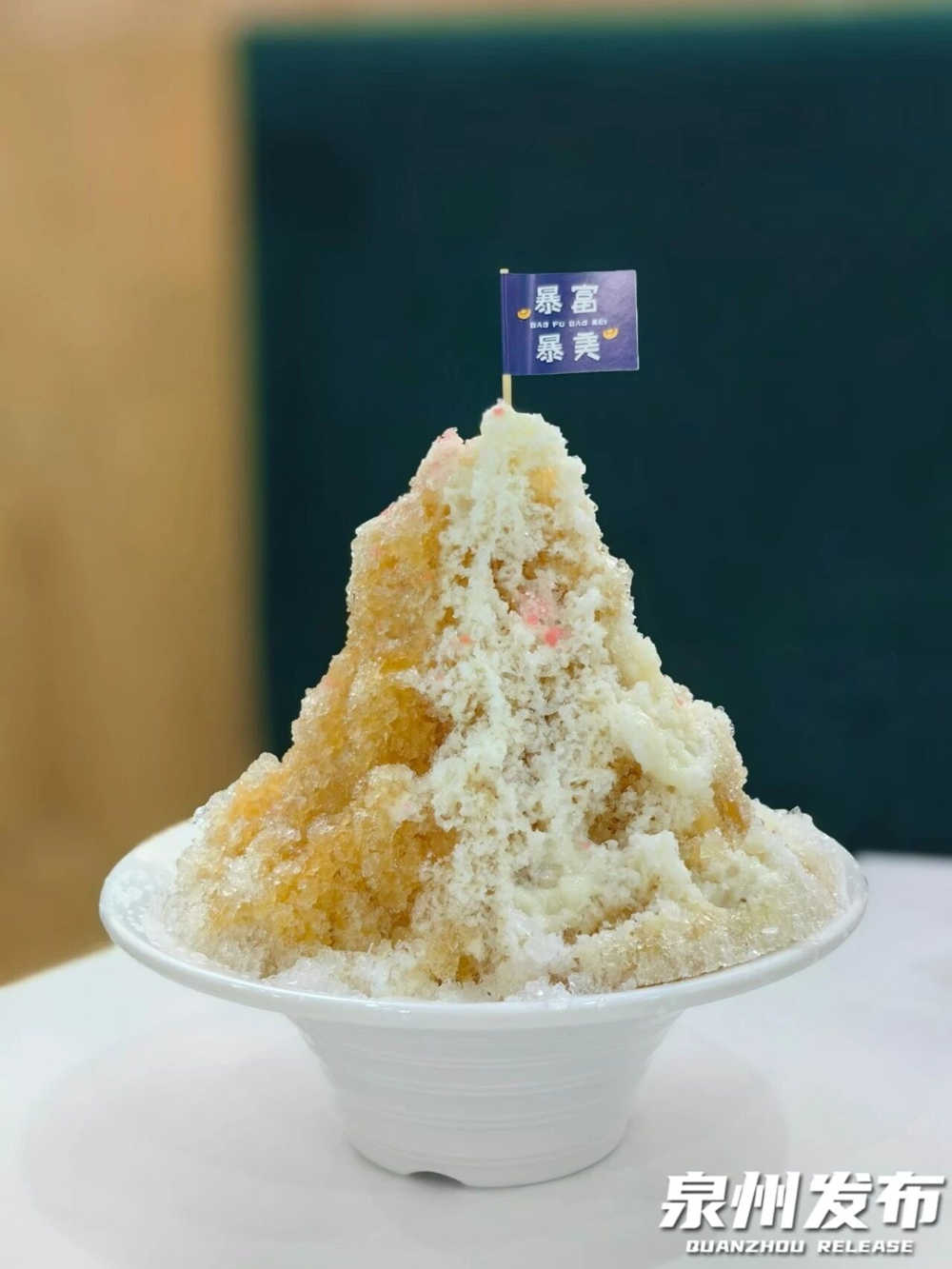
Shaved ice
"I've noticed many more ancient courtyard residences renovated into stylish cafes and teahouses. Stepping inside, you instantly feel cooled down by natural cross breezes. Sipping a custom drink while relaxing here is incredibly soothing — it truly lives up to the old wisdom that 'A peaceful mind brings natural coolness'," Ms. Yuan remarked. In recent years, Licheng District has advanced the in-depth revitalization of ancient architecture. Restored Minnan red-brick courtyards and Nanyang-style overseas Chinese villas have been transformed into artistic teahouses, niche cafes and leisure spaces, offering locals and tourists a peaceful retreat from the summer heat.
Quanzhou continues to upgrade its outdoor summer cooling offerings. The Jiushixi Pastoral Scenic Area in Jinjiang has optimized its water-based activities, including water bikes, kayaks and floating platforms, and launched nighttime floating movie screenings on the lake, allowing visitors to watch films while boating on the water.

Floating lake movie screening (Credit: Tianyang Jiujiu)
"Quanzhou now boasts a wealth of new summer cooling options, ranging from innovative desserts to brand-new leisure venues," said Zhang. Waterfront spaces including the Fenghai Road riverside landscape belt and Jinjiang riverside footpaths are ideal for evening heat relief. Among them, the Sealand Coastal Market and East Wild Beach Night Market on Fenghai Road integrate sightseeing, breezy outdoor relaxation and street food, becoming viral summer night spots for locals and tourists.
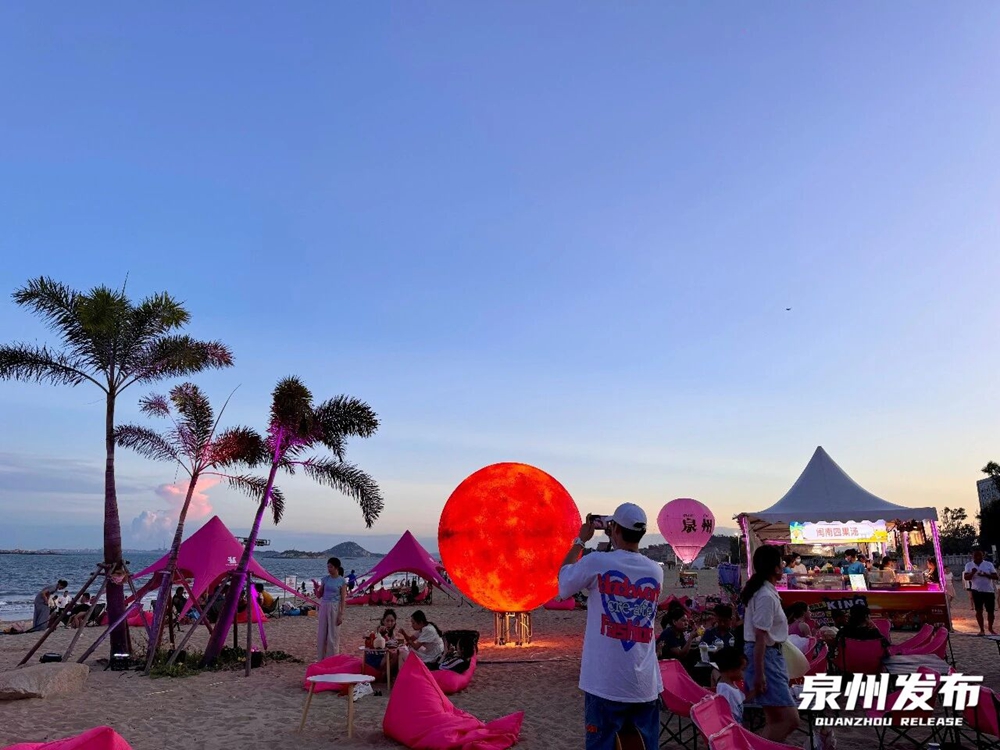
Coastal areas remain top summer cooling destinations in Quanzhou. Pictured: Moon Bay Park, Quanzhou Taiwanese Investment Zone.
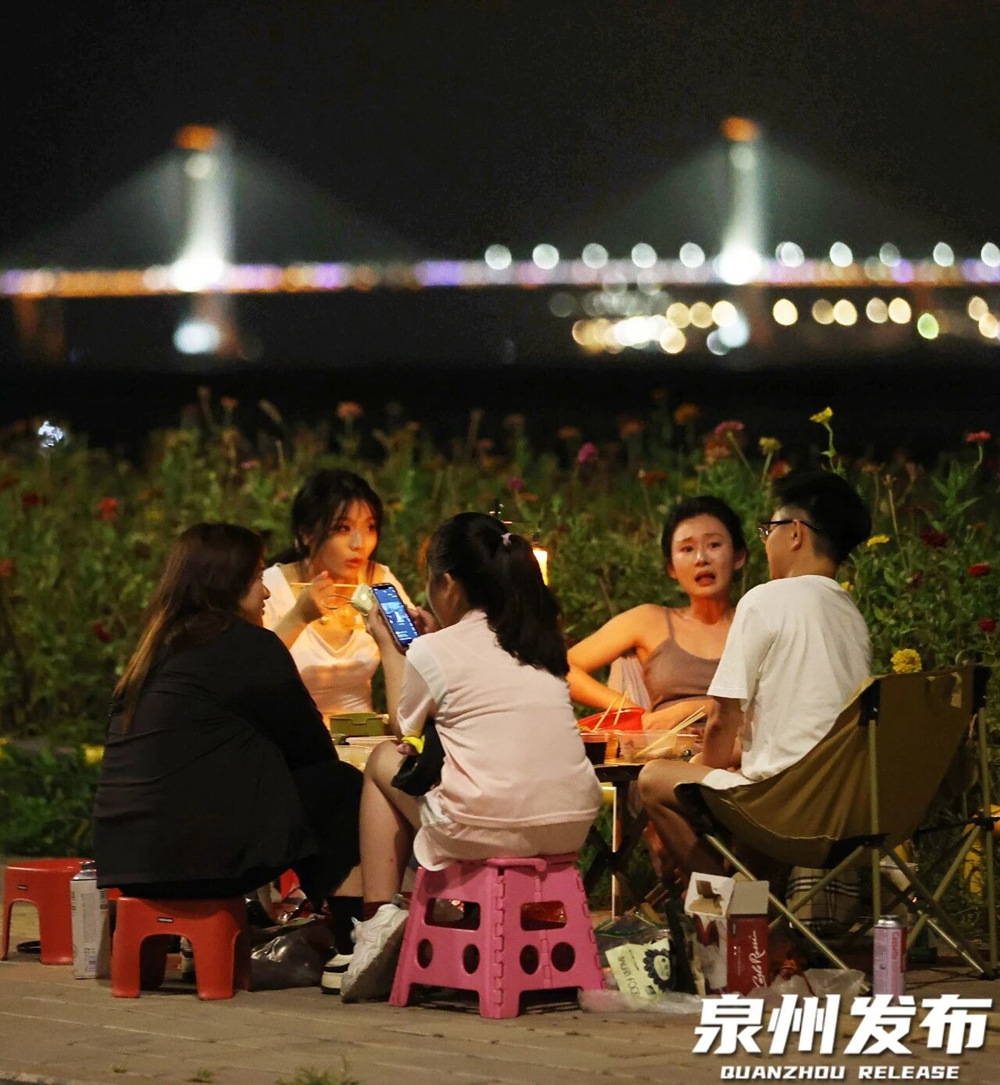
Hanging out with friends and savoring icy drinks on warm summer nights is one of the most delightful local pastimes.
Timeless Popularity of Traditional Local Cooling Flavors
As trendy cooling experiences thrive, Quanzhou's time-honored summer delicacies remain enduring fan favorites among summer diners.
As temperatures rise and the summer tourist peak arrives, Four Fruits Soup shops in the ancient city are bustling with customers. Journalists visited time-honored stores on Xianhou Street, Zhuangfu Lane and Tianhou Palace Road, where endless streams of locals and tourists queue up for the popular treat. At a heritage Four Fruits Soup shop near Tianhou Palace, local resident Ms. Lin brought her college classmates from Fuzhou to taste Quanzhou's signature summer dessert.
"Sea agar jelly, taro balls, taro paste and grass jelly are the core toppings of authentic Four Fruits Soup. My family often buys whole boxes of sea agar jelly to mix with honey water at home — it's incredibly refreshing and hydrating," she said. Despite the booming cultural tourism industry bringing constant crowds to these old shops, her family still visits regularly. For Quanzhou locals, sweet, icy Four Fruits Soup is far more than a cooling snack; it is a profound summer memory rooted in local life.
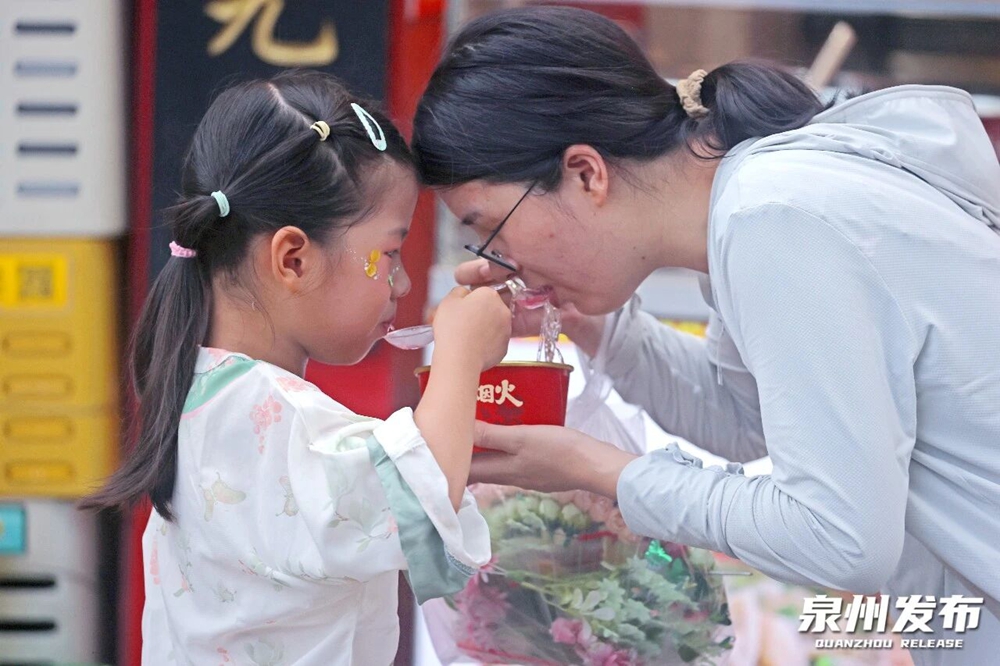
Sea agar jelly cooling treat (Archival photo from Quanzhou Evening News)
Traditional winter melon tea has also made a remarkable comeback. Multiple specialty winter melon tea shops have opened downtown, and major milk tea brands have rolled out dedicated winter melon tea product lines. Authentic winter melon tea is handmade by slow-simmering peeled, chopped ripe winter melon with brown sugar and rock sugar for three to four hours until the syrup turns thick and translucent, tasting best when served chilled.
To cater to younger palates, vendors have developed creative variations by adding lemon, passion fruit and green mandarin, or pairing the tea with grass jelly, taro balls, sea agar jelly and crystal jelly. "This tastes exactly like my childhood summer flavor. I've queued up to buy it many times this season," said local resident Mr. Zhuang, holding a signature chilled winter melon tea from a shop on Fengying Street. He recalled that his elders always brewed the tea in summer to clear heat, eliminate dampness and soothe summer discomfort.
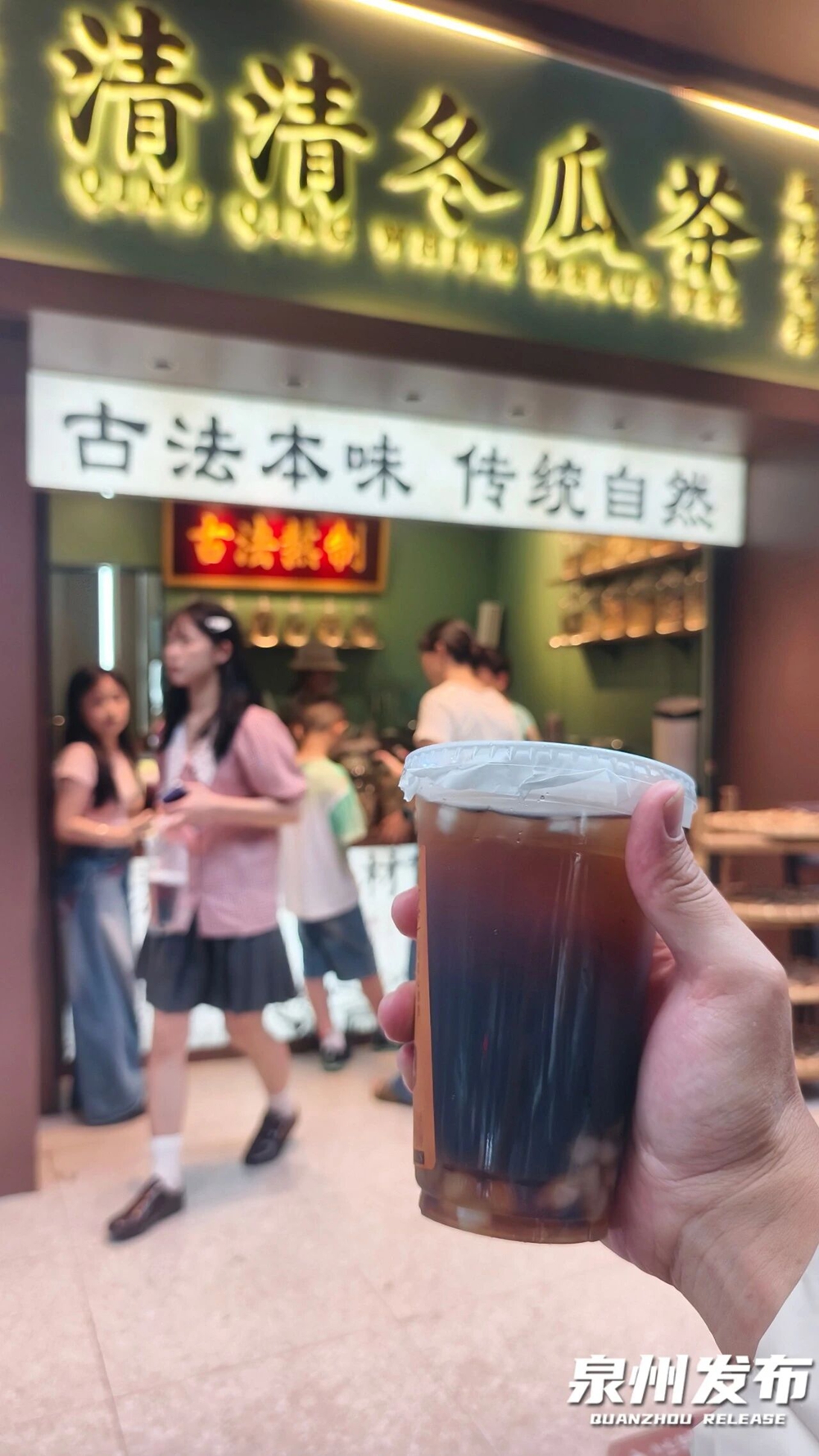
Traditional Quanzhou winter melon tea
"Sales of summer cooling beverages such as sour plum soup, as well as Wuyi Qingyuan and Lingyuan Wanying herbal tea cakes, surge every summer," shared a staff member at a pharmacy in Licheng District. Sweltering, humid summer weather easily causes internal heat, poor appetite and physical fatigue. For Quanzhou locals, brewing herbal tea cakes during the dog days is an indispensable summer tradition. These mild medicinal tea cakes clear heat, remove dampness, boost digestion and relieve summer fatigue. As a food-medicine wellness drink tailored for Minnan's unique climate, they are daily staples in local households and popular summer souvenirs for tourists.
This year, the Fengze District Supply and Marketing Cooperative Tea Company launched the Wuyi Qingyuan Herbal Tea Craft Experience Hall in Xunpu Village, receiving over 8,000 visitors during the May Day holiday. Rooted in century-old intangible cultural heritage tea craftsmanship, the venue blends traditional folk customs with modern interactive experiences. Visitors can handcraft herbal tea cakes, experience incense art, enjoy Minnan Nanyin opera performances, taste free cooling tea and interact with smart robots, exploring Quanzhou's ancient summer cooling culture through immersive heritage experiences.
City-Wide Public Welfare Cooling Campaigns
Quanzhou features a heartwarming, one-of-a-kind summer scene: charitable water and tea stations spread across every street and community throughout the city.
This June, Licheng District set up 67 "Warm New Licheng" charity water stations covering ancient city business districts, popular tourist streets, renovated heritage courtyards and major roads. These stations provide year-round free herbal tea cake and chrysanthemum drinks, prioritizing outdoor workers including sanitation staff, food delivery riders, traffic police and construction workers, while offering convenient cooling rest for citizens and tourists.
Licheng District has also renovated ancient courtyard buildings into public cooling service stations, integrating heritage architecture with community public services. Each station offers free chilled herbal drinks, drinking facilities and rest seats, with dedicated rest and service zones for visitors and residents. First-aid kits equipped with bandages, iodine and burn ointments are available for emergencies.
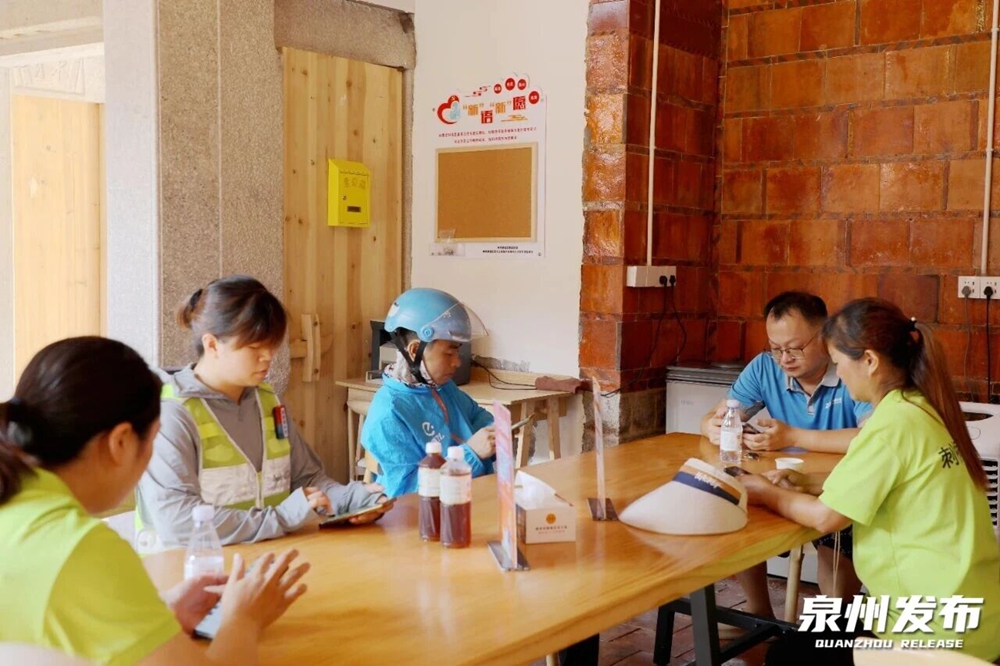
Ancient courtyard renovated into a labor union rest station for heat relief (Source: WeChat Official Account "Licheng Weishi")
Residents and outdoor workers can locate and navigate to 221 standardized warm service stations across Fengze District via the "i Fengze" mini-program. Built within community centers, street shops and industrial parks, these stations are fully equipped with air conditioners, refrigerators, microwaves and charging devices. Chilled herbal tea and drinking water are available 24/7 throughout summer, alongside heatstroke prevention medicines and rest facilities, forming a 15-minute accessible cooling service network for outdoor workers.
Public welfare cooling services represent a long-standing urban tradition in Quanzhou. The Quanzhou Federation of Trade Unions operates over 680 worker rest stations and charity tea stalls citywide, providing free drinking water, cooling spaces and charging services for outdoor laborers.
The charitable freezer volunteer program launched by the Southeast Public Welfare Association under Quanzhou Evening News has run for 14 consecutive years, donating over 1.21 million bottles of drinking water as of 2025. Volunteer-staffed free water stations are distributed across the city, with volunteer teams regularly delivering cooling supplies to construction sites and street work areas.
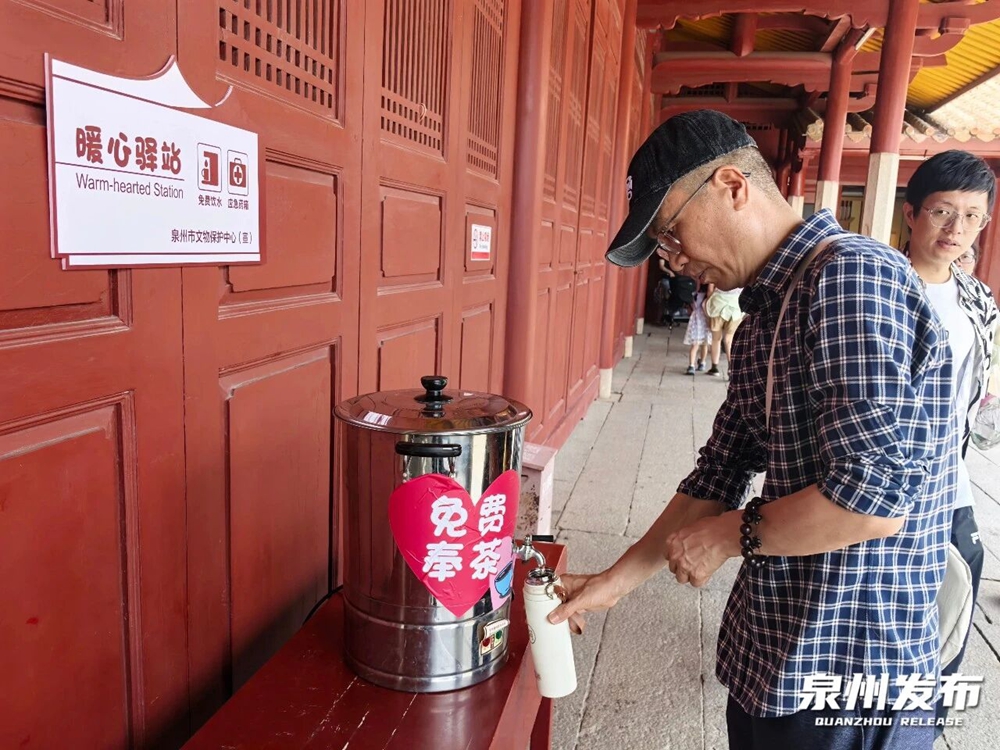
Quanzhou's free charity tea service wins high praise from tourists (Archival photo from Quanzhou Evening News)
Grassroots voluntary cooling efforts are also widespread across the city. Every summer, local shop owners and warm-hearted residents set up temporary free herbal tea stalls for passersby and outdoor workers. Wang Baishan, a resident of Haibin Subdistrict, has run a free tea stand outside her children's bike shop for 16 years, providing fresh daily herbal tea for delivery riders and sanitation workers. Chen Jianguo, the eighth-generation inheritor of Laofanzhi Wanying Medicinal Tea, has offered free tea at his Guitan Lane shop for decades. Elderly Huang Huilan from Jiuyi Post on West Street has maintained a street-side free tea stall for over 30 years. This cross-generational charitable tradition embodies Quanzhou's unique humanistic summer charm.
Special Report: A Millennium of Quanzhou's Heat-Beating Wisdom
Located on China's southeast coast, Quanzhou features long, hot and humid summers. For thousands of years, local ancestors leveraged regional mountain and marine resources and unique climatic conditions to develop systematic heat-relief lifestyles, enabling comfortable summers long before the invention of electric fans and air conditioners.
Culinary wisdom constitutes the core of Quanzhou's cooling heritage. The iconic Four Fruits Soup dates back to the Tang Dynasty. Legend has it that General Wei Jing, stationed in Minnan, created this nourishing sweet soup of lotus seeds, coix seeds, mung beans and tremella to eliminate summer plagues and heat illnesses among her troops, making it the earliest prototype of today's Four Fruits Soup.
During the prosperous maritime trade era of the Song Dynasty, betel nuts were widely imported to Quanzhou. Min Region General Records, citing Quanzhou Local Maps, documents that local residents chewed betel nuts mixed with clam ash to dispel coastal summer dampness and miasma — a practice corroborated by betel nut relics unearthed from a Song Dynasty shipwreck in Quanzhou Bay. Additionally, Mountain Dwelling Simple Dishes, written by Southern Song Dynasty scholar Lin Hong from Shishi, records traditional local cooling drinks including Hangxie Syrup, a soothing sweet beverage brewed from sugarcane and white radish.
Herbal tea has served as a summer staple for centuries. Wuyi Qingyuan herbal tea cake boasts nearly 200 years of history, crafted with techniques inherited from the imperial dragon-phoenix tea cakes of the Song and Yuan dynasties. Lingyuan Wanying medicinal tea cake has a history of 500 to 600 years, originated in the Ming Dynasty by Monk Dajia of Lingyuan Temple, who developed the formula by blending 17 local wild herbs with traditional Chinese medicinal ingredients. Both remain household summer cooling drinks for Quanzhou residents.
Ancient locals also tailored summer clothing for high-temperature labor. Coastal fishermen and tidal flat workers invented tuber-dyed cloth shirts, made from local fabric dyed with wild tuber sap. Lightweight, breathable and quick-drying, the fabric resists sweat adhesion and adapts perfectly to the sweltering and humid coastal climate.
Traditional local architecture embodies exquisite passive cooling design. Quanzhou's signature red-brick courtyard residences feature thick heat-insulating brick walls that block intense midday solar radiation. Central courtyards paired with narrow side alleys form a natural air convection system, while high roof windows expel hot air, generating steady cross breezes that keep interiors cool without electric cooling equipment — realizing the local saying "No fan needed with natural courtyard wind." In ancient times, wealthy families cooled fruits and drinks with constant-temperature well water, while ordinary households planted climbing vines on courtyard trellises for natural shading.
Despite its diverse cooling methods, Quanzhou's traditional wisdom prioritizes moderation. The local philosophy advocates adapting to seasonal rhythms and pursuing coolness without compromising health, encapsulated in the age-old folk maxim: "Eat radishes in winter and ginger in summer, and you will never need a doctor's prescription." Excessive cold food intake and prolonged stays in cool, damp environments cause internal dampness and impair digestive function. Balancing cooling treats with mild warm foods helps boost physical resilience, allowing locals to enjoy healthier, more comfortable summers.
Multimedia Reporters: Li Jing, Zhuang Lixiang
 Return List